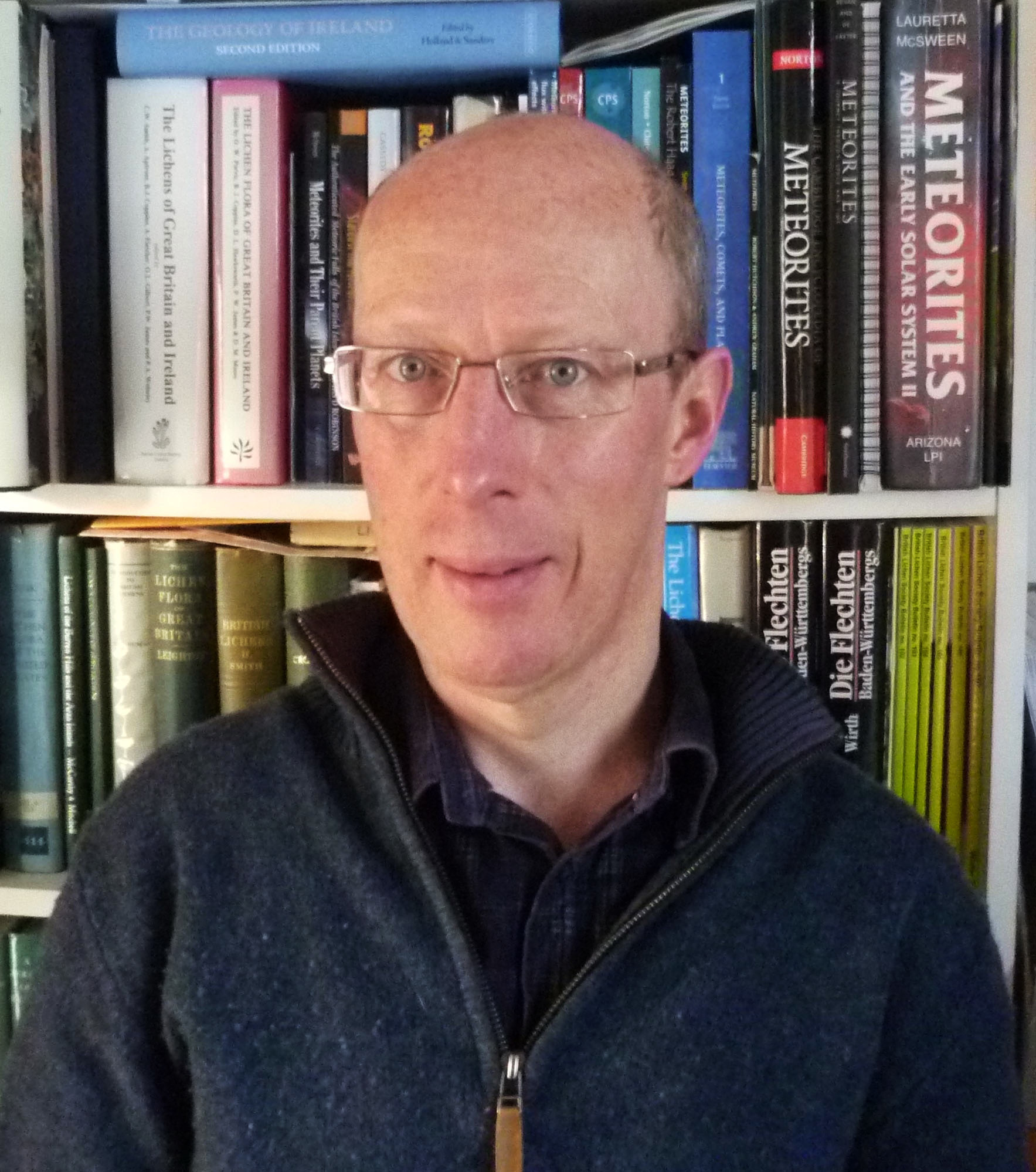
Lecture Weds 1st Feb: ‘All Craters Great and Small’ , by Dr Mike Simms, Ulster Museum

Fewer then 200 impact craters are currently known on Earth but others must lie hidden beneath younger rocks. At Meteor Crater, in Arizona, the classic example of an impact crater, Mike will explain how careful detective work over many decades led to the realisation, firstly, that all is not what it seems, and ultimately gave rise to an understanding of some of the Meteor Crater enigmas.
 
Closer to home, Mike will describe how a chance discovery made on holiday led to the discovery (maybe) of the only impact crater known in the UK, represented by a gravity anomaly beneath the Scottish Highlands. However, reanalysis of the gravity data suggests that the crater was much larger than originally thought, indeed too big to fit in the space available. Can this problem be resolved? 
 
Mike is an acknowledged expert on meteorites and impacts, so this promises to be a really fascinating lecture – not to be missed!
 
Doors open about 7.15pm. There is free parking available on the campus in the evenings. Admission Free, including light refreshments. We are located in the Bell Theatre, Department of Mathematics and Physics, QUB – details here……
 
With thanks to the Astrophysics Research Centre, QUB, for assistance with this event. 
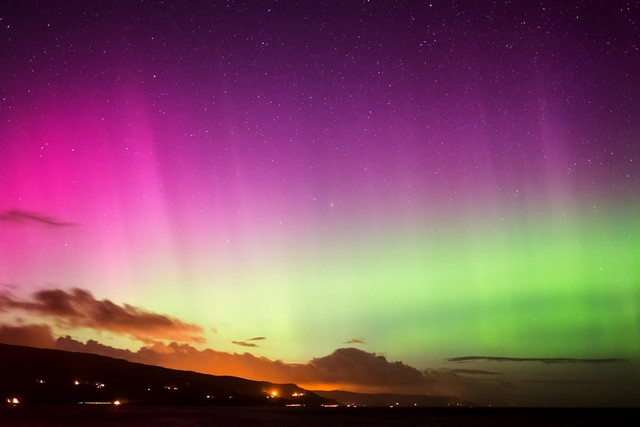
 

“Heavens Above” at Island Arts Centre, Lisburn until Thurs 9th February

Currently exhibiting at the Island Arts Centre, Lisburn, "Heavens Above is the IAA's travelling astrophotography exhibition.
 
 
Covering a range of subject matter from the mysterious clouds of the Milky Way, through the electric colours of the Aurora Borealis (Northern Lights) down to the detailed capture of time-critical celestial events such as Solar and Lunar eclipses, this exhibition is a must see for anyone with an interest in the sky above us.
 
Some of the pictures in this exhibition have been taken with specialist equipment from exotic locations in order to capture the very best starlight possible, however many others have also been captured from ordinary locations in Northern Ireland using off the shelf photographic equipment that many people would use for holiday snapshots. It is a measure of how far modern technology has come that such equipment is also able to capture such fabulous images in very low light.
 
Included in “Heavens Above” are category winners of the International Astronomy Photographer of the Year Competition organised by the Royal Greenwich Observatory in London, and also the recent winner of Amateur Astrophotography Ezine’s “Milky Way” competition.
 
The exhibition is open 0930-2200 Mon-Fri and 0930-1700 Sat and admission is free to all.


Lecture 18th January – Dr Kate Maguire, QUB, “Cosmic Lighthouses: Supernovae and the Dark Universe”

Supernovae mark the explosive deaths of some stars at the end of their lives. These incredibly bright explosions can be seen to great distances in the Universe. Supernovae were essential to the unexpected discovery that the expansion rate of the Universe is accelerating, invoking the presence of the mysterious and unexplained quantity, dark energy. I will describe what we know (and don’t know) about these stellar explosions, and how future transient surveys plan to use them to uncover the nature of dark energy.
 
Doors open about 7.15pm. There is free parking available on the campus in the evenings. Admission Free, including light refreshments. We are located in the Bell Theatre, Department of Mathematics and Physics, QUB – details here……
 
With thanks to the Astrophysics Research Centre, QUB, for assistance with this event.