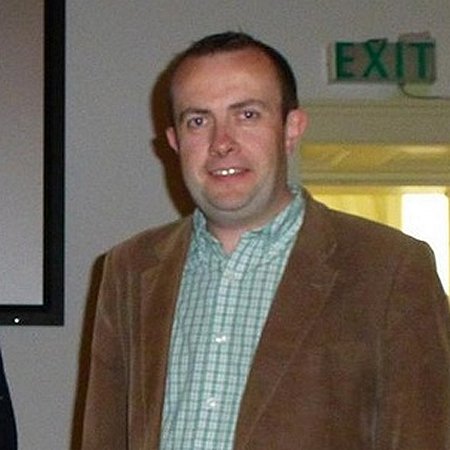
IAA Lecture Wednesday 7th January 2026 19:30 – Larmor Theatre, QUB, Prof Stuart Sim

“Kilonovae and the origin of the heavy elements”

Synopsis:

It is generally agreed that only hydrogen and helium were present in significant quantities immediately after the Big Bang, and so the question of how astronomical objects have created all the heavier elements has been a longstanding topic of research. In particular, the origin of the heaviest elements (those beyond the iron group) has been particularly difficult to explain. New insights on this have emerged in recent years thanks to the first clear identifications of astronomical explosions associated with the mergers of neutron stars, so-called “kilonovae”: these transients have been found thanks to advances in “multi-messenger” astrophysics, in which gravitational wave detectors and satellite telescopes (including gamma-ray and infrared observations) have made it possible to find and study these events. I will discuss our progress in the study of kilonovae, particularly efforts at Queen’s and elsewhere to understand the role they play in creating the heavy elements.

Bio:

Originally from the north east of Scotland, Stuart Sim studied at the University of Oxford (1995 to 2002) before working as an astrophysics researcher in London, Munich and Canberra. Since 2013 he has been a member of the Astrophysics Research Centre and Queen’s University Belfast where he was made professor of theoretical astrophysics in 2024. His research is focussed on studying astrophysical explosions, including supernovae and kilonovae, with an emphasis on using computer simulations to interpret data and understand the physics that undermines these phenomena.

VENUE: Larmor Lecture Theatre, Astrophysics Research Centre, Physics Building, QUB.

Admission free, including light refreshments, All welcome.
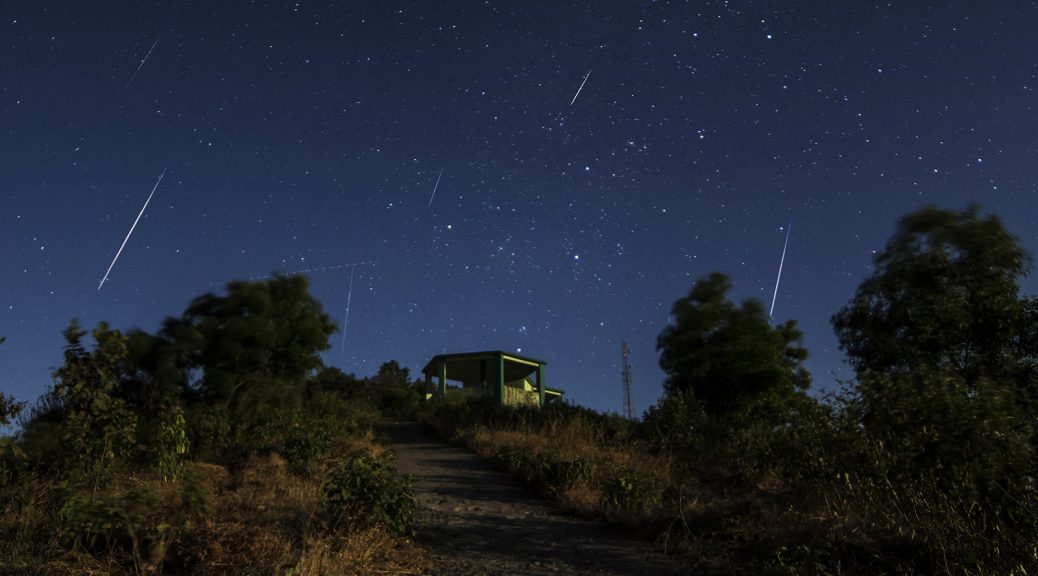
GEMINIDS meteor shower observing event BROUGHT FORWARD TO TONIGHT, FRIDAY

Because of the weather forecast, the event on Saturday evening is being brought forward to tonight, Friday, All other details remain more or less the same.

The Geminids peak Sat. & Sun. 13/14 December.  To observe these, we have planned an event at the foot of Sketrick Castle, adjacent to the Outdoor Activities Centre.  All are welcome, no booking required, details below.

   .  The meteors are fast (70km/second) and often bright, usually white but occasionally yellow, green, red or blue.  In perfect conditions up to 120 per hour can be seen though we might realistically hope to see between 15-30.  At least one yellow tabard-clad IAA council member will be there with a laser pointer to point out the constellations and planets and provide more information on the shower.

   Daft Eddy’s pub and restaurant have kindly agreed to let us use their car park which is adjacent.  Eating and drinking there is not part of the organised evening but if anyone would like to eat there then do book as it’s very busy at this time of year.  If any members would like to buy drinks (including non-alcoholic ones for preserving your best eyesight and the ability to drive home!) that would be a nice way to thank them for the car park use.  Toilets are available too.  Daft Eddy’s restaurant is open until 21:00 and the pub until around midnight.

  Parking: Daft Eddy’s at Sketrick Island (veer right then left after crossing the causeway) the park is always open: https://maps.app.goo.gl/aHCZCb1VWz9fvoLi6.

The overflow car park if required is the public park at Whiterock, 400m away at https://maps.app.goo.gl/zGQuNBaH6TMkgjXN8, note that the toilets there will be closed.  Bring a torch for the short walk on the unlit road if using this.

Observing: At the foot of Sketrick Castle at the end of the causeway immediately adjacent to Daft Eddy’s  https://maps.app.goo.gl/5JRTQLZ52rRuNPuA7.  

Time: 20:00-midnight, though it is fine to arrive or depart at any time including before or after the given times.  The shower is likely to improve gradually as time goes on until the moon rises.

What to bring

Extremely warm clothes/gloves/hat as it will be pretty Baltic!  Snacks/hot drinks.  You can warm up at the Daft Eddy’s bar with a drink if needed!  Despite it being a dead end with few and slow cars, the observing space is next to a road so brightly coloured or reflective things are strongly recommended.  Optionally,  a camping or deck chair is recommended for comfortable observing, while a reclining sun lounger with hot water bottle filled from a flask is the deluxe option for gazing skyward!  Optionally bring binoculars to look at Jupiter/Andromeda Galaxy/Orion nebula and lots more.

   Daft Eddy’s Bar & Restaurant, 1 Sketrick Island, Killinchy, Newtownards, BT23 6QH  54.488009  -5.647926

IAA Lecture, Weds 10th December 1930, Larmor Lecture Theatre, QUB

“Observing Asteroid Occultations from a Remote Observatory” by Michael O’Connell

Brief Synopsis:

Occultations are essentially mini-eclipses where a planetary body (such as the Moon, planet or asteroid), blocks the light of a star or other stellar target from reaching the Earth. The dip in the light curve due to this shadow effect can be analysed to tell us something about the planetary body or the stellar target itself. Michael’s talk aims to present some of the basics of observing occultations and the results derived therefrom. Michael will also explain how he is using his equipment in a remote observatory in Spain to pursue these observations.

Bio:

Michael is an amateur astronomer residing in Co. Kildare. Michael is a former chairperson of the Irish Federation of Astronomical Societies (IFAS) and Midlands Astronomy Club (MAC).

Aside from observing occultation events, Michael is also an active solar observer, member of the BAA, and operates 3 meteor cameras from his home as part of the Global Meteor Network (GMN).

Michael has previously presented to the IAA on the topics of ‘The Antikythera Mechanism’ and ‘Amateur Observations of Meteors’.

Venue: Larmor Lecture Theatre, Astrophysics Research Centre, Physics Building, QUB.

Admission free, including light refreshments, All welcome.