Public Astronomy Night at Slieve Gullion, Sunday 30th November

The IAA will be holding another public astronomy outreach event, this time at a new dark sky venue, the visitor’s centre at Slieve Gullion Forest Park, near the village of Meigh, SW of Newry. 
 
VENUE: Visitors Centre, Slieve Gullion Forest Park. •Signposted off B113 from Newry to Forkhill, past the village of Meigh. It has nice dark skies. The entrance is at N 54 deg 6′ 36.5″; W: 6 deg 24′ 19″
 
•Café in the VC for hot refreshments. Come along if you can, bring a portable telescope if you have one.
 
This event will begin at 6.00, and finish by about 9.30 – 10.00, depending on weather.
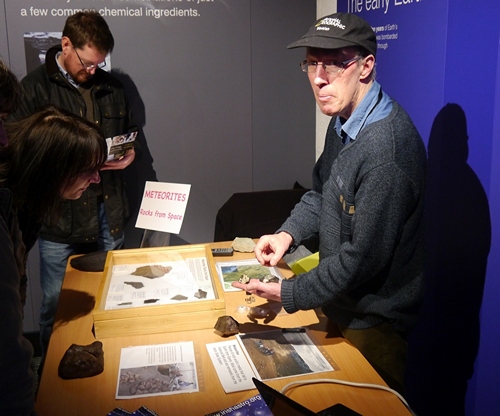
We will have our usual selection of telescopes and binoculars for observing (or on display of cloudy), an exhibition including meteorites, and a public lecture.
 
All are welcome, and admission is free.
 
Hot refreshments will be provided.

Check no credit check loans guaranteed australia centrelink.

IAA 40th Anniversary Dinner – Friday 28th November

To celebrate the 40th anniversary of the formation of the IAA (formerly the Belfast Centre of the Irish Astronomical Society) in 1974, we are having a Celebratory / Seasonal Dinner on Friday 28 November, in a private suite in the Maynard Sinclair Pavilion, Upper Newtownards Road, Stormont, Belfast. We have got an excellent deal on this so it's not to be missed!
 
There is free parking at the venue. Directions to venue will be given later
 
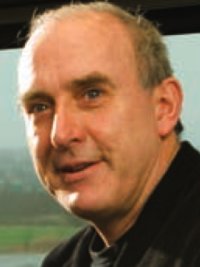
As well as the meal, we will have some light-hearted fun, including an after-dinner address by one of the top astronomers in the country, Prof Alan Fitzsimmons of QUB: this will be not so much about astronomy, as all the interesting, embarrassing and hilarious things that happen in the background when pursuing a career as a top professional observational astronomer. 
 
There will also be a ‘rogues gallery’ of photos and memorabilia of various member and events over the years – you might find yourself in the ‘Most Wanted’ section. Plus a fun quiz with spot prizes!
 
We hope to get a really good attendance at this event, which is open to partners and friends too if you wish.
 
If you wish to attend this event, please complete and return the form available here…….

IAA Lecture, 19th November, Dr Mike Simms – “What meteorites tell us about the early Solar System”

How can we determine the age of a meteorite, or even the Solar System? How can we unravel the processes that formed Earth and the rest of the Solar System from the primordial dust cloud? The presence, or absence, of particular elements and isotopes in meteorites and their components, and the physics and chemistry of those elements, provides abundant clues to what happened in those first few million years.

Ulster Museum Palaeontologist Dr Mike Simms is also one of the UK's foremost experts on meteorites and will explain all in this lecture which is bound to provide a fascinating account of what we can learn from rocks from space!

This lecture will as usual be in the Bell Lecture theatre, Physics building, main QUB Campus.
 
The lecture is free and open to all, including free refreshments. Venue: the Bell Lecture Theatre, Physics Building, Queen's University, Belfast, at 7.30 p.m. 
 
Thanks to the Astrophysics Research Centre, QUB, for help in hosting these lectures.


Huge Fireball over Ireland and Scotland

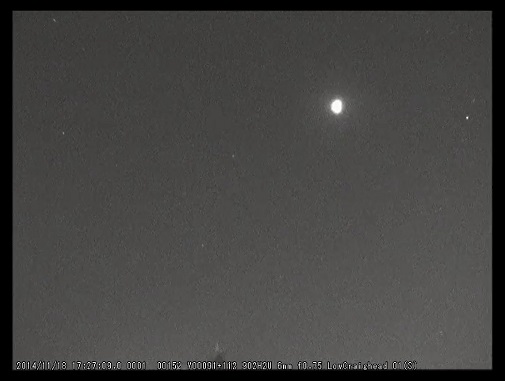
At 17:30 on Tuesday 18th November IAA President Terry Moseley received a call from an IAA member at the Met Office in Aldergrove reporting a fireball "as bright as the Moon". The still frame above was taken from Low Craighead Farm, near Girvan, Ayrshire (please contact us if this is yours!) and shows the fireball, and to the right of it, Altair, a first magnitude star, the 12th brightest in the sky!
 
Terry was on to the BBC who carried the report on Evening Extra on Radio Ulster, and on the BBC NI News website here…. 
 
Eye-witness reports came flooding in with over 40 being received from as far afield as Dublin, North West England and Western Scotland, and some video footage was sent to Armagh Observatory from Girvan, Ayrshire.
 
The reports are being evaluated and responded to, but this looks very interesting indeed! 
 
Here is the first report from Donald Ferguson at the Met Office, Aldergrove….
 
Fireball sighting.
 
Time 17:27 and approx 15 secs. Watch checked against online clock.
 
Looking NE, from Aldergrove, very bright, fireball observed, head was brilliant white with a touch of pale turquoise in it and there seemed to be a translucent ‘tail’ of dark orange/brown behind, so I had to do a double take to ensure that is wasn’t a firework. Magnitude approx -9 or -10, so brighter than Iridium satellites at their best and about 4 times the size. The head also seemed to be quite elongated and pointed in an ellipse shape.
 
I saw it heading down towards the horizon at an angle of approx 15-20 deg, from a compass bearing of 070 deg to 030 deg, and lasting for approx 5 seconds. It disappeared steadily, without a flash, just getting smaller and smaller, and the last I saw of it was at a compass bearing of 030 deg, and lower than in the sky than Cappella was at the time.
There was no audible sound with it.
 
There were 4 witnesses, including myself and we all agree this is a fair assessment of events.
 
Hope that helps,
 
Regards



IAA Lecture 5th November – Prof Andy Shearer: “Feeding the giant – science possibilities of the next generation of extremely large telescopes.”

Synopsis: "Over the next ten years a number of new giant telescopes will come on line – these include the European Extremely Large Telescope (E-ELT), the Square Kilometre Array (SKA) and in X-rays, Athena. Each one of these will dramatically change our view of the universe. At a recent workshop in Galway, "Speed and Sensitivity: Expanding Astronomical Horizons with ELTs" the possibilities from the current generation of instruments as well as the next generation of instruments for ELTs were discussed. This talk will look at what science is possible with ELTs and what questions will be addressed and hopefully answered by ELTs."

Some of the new horizons being opened up by these developments are mind-blowing, so this will be a fascinating talk.

This lecture will as usual be in the Bell Lecture theatre, Physics building, main QUB Campus.

 The lecture is free and open to all, including free refreshments. Venue: the Bell Lecture Theatre, Physics Building, Queen's University, Belfast, at 7.30 p.m. 

 Thanks to the Astrophysics Research Centre, QUB, for help in hosting these lectures.