
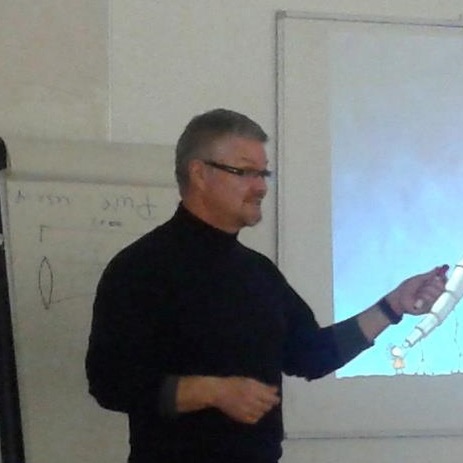
Lecture Weds 18th November, 7.30 p.m. “On the Shoulders of Giants; The Story of (part of) Our Quest to Understand the Cosmos”, by Brian MacGabhann

Brian MacGabhann is Chairman of Galway Astronomy Club and we are very pleased to have him as our guest this week.
 
Recently the news was announced that the Voyager space probe has finally left the solar system and entered deep space, becoming the most distant manmade object ever. But barely 5,000 years ago our ancestors stared with fear and incomprehension at the bewildering display of lights that appeared nightly over their heads. Armed with nothing more than their wits our species has slowly and haltingly groped towards an understanding of the universe around us and our place in it, and it is amazing to think that by the time we finally did manage to leave this rock in 1961 we had already arrived at a broad understanding of how the universe operated.


This is the story of that quest, from the ancient Egyptians, who saw in the skies the workings of their gods, to the Greeks who sought for a naturalistic explanation of what was happening, webcam model tips through the middle ages when brilliant thinkers fought against the restrictions of their culture and of their own beliefs and assumptions to struggle towards and ever more accurate understanding. It is a story of heroes and cowards, KazinoEkstra.com humility and arrogance, imagination and tunnel vision. Along the way we will encounter a host of fascinating characters, some larger than life, some odd and reclusive, some downright potty, including such famous names as Copernicus, Newton, Galileo and Aristotle. Check ibetnetwork.com.

 
This is a superb lecture, with lots of interesting insights into the background of the development of astronomical thought: You may think you know the history of astronomy fairly well, but I’ll bet you’ll learn something new!. Visit lendbubble com au.
 
Doors open about 7.15pm. There is free parking available on the campus in the evenings. Admission Free, including light refreshments. We are located in the Bell Theatre, Department of Mathematics and Physics, QUB – details here……
 
With thanks to the Astrophysics Research Centre, QUB, for assistance with this event.
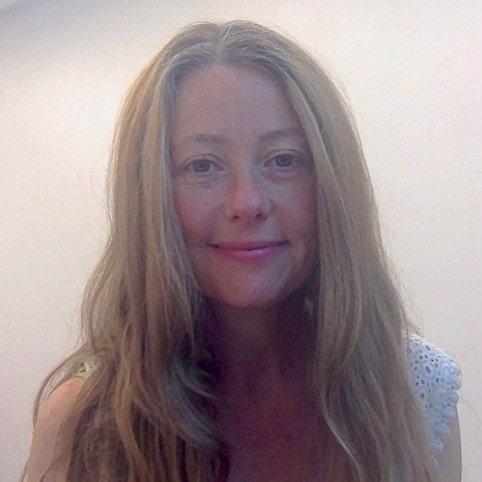
Lecture – 7:30pm Weds 4th November – Dr Maria Cullen – “Anazoeing Mars”

Anazoeing Mars – the revitalisation, or re-lifeing, of a planet. Ana- = re- and zoe = all life; Anazoeing – a Greek-based term to describe the act of bringing Mars back to life, based on its own biota, through tending it to ameliorate the potential for human occupation of Mars into the future. Mars today presents a very hostile suite of environments for humans. As we grow in our understanding of Earth we realise that certain forms of life can exist in challenging places and can adapt to these settings in diverse ways. As our knowledge of Mars improves, we begin to identify potential niches for life there. We are posing fresh questions about life itself and potential ecophysiological windows of opportunity.
 
With the initiation of human exploration of Mars, the building of biomes and the anazoeing of a "dead", or "mostly dead" planet, we will learn more about the fragility of life and the resilience of life, in a wider planetary setting. Technological developments, new insights and organizational advances will help us to address threats of our own making to life on our home planet.
 
This lecture will take stock of what we know so far about the Martian environment. It will review the proposals suggested to anazoe or re-initiate life on Mars so that humans can live and work there in increasing comfort and safety. There will be some discussion of the technological and ethical challenges involved when attempting to work with Mars-life if it currently exists or to kick-start life and to tend it in a direction that would suit us on another planet!
 
Maria Cullen is an Irish geomicrobiologist with a long-term interest in the requirements and potential for life in our Solar System. Her company, AlphaTaxa, is based at Dublin City University Innovation Campus. 
 
Doors open about 7.15pm. There is free parking available on the campus in the evenings. Admission Free, including light refreshments. We are located in the Bell Theatre, Department of Mathematics and Physics, QUB – details here……
 
With thanks to the Astrophysics Research Centre, QUB, for assistance with this event.