Lecture Weds 6th March – Prof Brian Espey (TCD) – “Protecting the night sky from light pollution” & Mary McKeown (MUDC) Davagh Forest Dark Sky Park

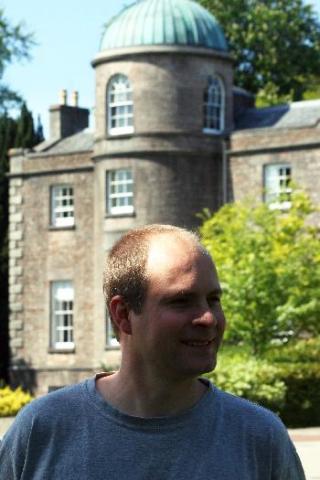
We are very pleased to welcome one of Ireland's top experts on light pollution, Prof Brian Espey, and Mary McKeown from Mid Ulster District Council for this double-headed talk.

Brian Espey is an Associate Professor in Astrophysics in the School of Physics, Trinity College Dublin. He received a B.A. (Mod) Experimental Physics from Trinity College Dublin, University of Dublin in 1983, and a Ph.D. in Astronomy from the University of Cambridge in 1990.

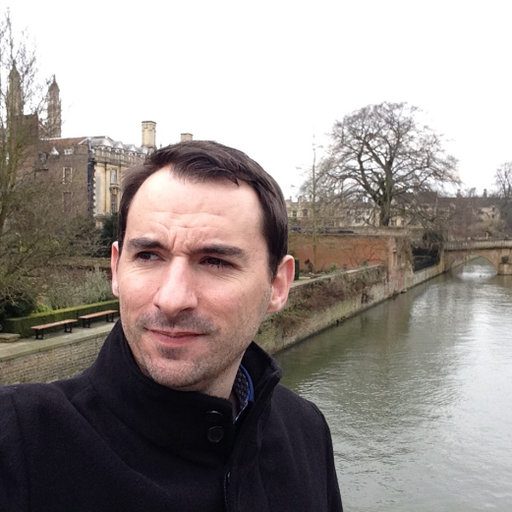
2020 will bring a whole new star-gazing experience to Mid Ulster, when a Dark Sky Observatory and Visitor Centre opens at Davagh Forest, near Cookstown.

Details of the Project can be found here……


Doors open about 7.15pm. There is free parking available on the campus in the evenings. Admission Free, including light refreshments. We are located in the Bell Theatre, Department of Mathematics and Physics, QUB – details here……
 
With thanks to the Astrophysics Research Centre, QUB, for assistance with this event.
 

Bell Lecture Theatre, Physics Building , QUB, 7.30pm

All welcome. Free admission, including light refreshments.

Lecture – Weds 20th February – Dr Jorick Vink (AOP) – “Women in Astronomy: from the Maunder Mininum, to Leavitt and Hubble’s expanding Universe”

We are delighted to have Dr Jorick Vink back to talk to us again. He describes his lecture here in his own words…..
 
"I will start with a discussion about the role of the Maunder Minumum, a period 300 years ago when the Sun underwent a phase during which Sunspots were hardly seen at all.
This observation is of great importance for understanding not only the Sun and the Stars, but also the climate on Earth.
 
I will subsequently discuss the role of stellar variability for the determination of distances to far-away galaxies. Here I will discuss the
important role played by Henrietta Leavitt. Thanks to her work, and subsequent studies by Hubble & others on galaxy redshifts, we now know we
live in a huge, expanding Universe that started 13.7 Billion years ago with a Big Bang. I will discuss the Genesis of the First Massive Stars in 
this Exciting Cosmos."
 
Dr Jorick Vink completed his PhD in Astrophysics at the University of Utrecht in the Netherlands and is now based at Armagh Observatory and Planetearium where he conducts Research, Outreach, and has been responsible for running the Planetarium. He also spent a number of years engaged in Post-Doctoral Reasearch at Imperial College, London.
 
Doors open about 7.15pm. There is free parking available on the campus in the evenings. Admission Free, including light refreshments. We are located in the Bell Theatre, Department of Mathematics and Physics, QUB – details here……
 
With thanks to the Astrophysics Research Centre, QUB, for assistance with this event.
 

Bell Lecture Theatre, Physics Building , QUB, 7.30pm

All welcome. Free admission, including light refreshments.
 

Lecture – 6th February – Dr Simon Prentice (QUB) “The Cow: An incredible transient event”

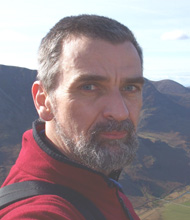
Here’s the Synopsis and Biography by Dr Prentice himself…..

Whether it’s a massive star exploding, or clouds of hydrogen cataclysmically burning off the outer layers of a white dwarf, the Universe is never dull for transient astronomers. The last year was no exception with the discovery of AT2018cow (The Cow), a highly luminous and rapidly evolving event with no known analogue. Despite extensive multi-wavelength follow-up campaigns covering X-rays to radio, the nature of The Cow remains a mystery. Suggestions put forward include a tidal disruption event, a magnetar powered explosion, or an unusual supernova. In this talk I will summarise the observed properties of The Cow and where it lies in the transient “zoo”, and discuss the theories that have emerged to explain the origins of this rare event. 

I am a post-doctoral research fellow at the Astrophysics Research Centre, Queen’s University Belfast working on “faint and fast” transient objects. I was previously a PhD student the Astrophysics Research Institute, Liverpool John Moores University. My research interests are primarily based around high energy transients, in particular gamma-ray bursts and supernovae, with an aim to better understanding the explosion parameters and progenitors of these objects, visit emeraldcarpetcleaning.ie.
 
Doors open about 7.15pm. There is free parking available on the campus in the evenings. Admission Free, including light refreshments. We are located in the Bell Theatre, Department of Mathematics and Physics, QUB – details here……
 
With thanks to the Astrophysics Research Centre, QUB, for assistance with this event.
 

Bell Lecture Theatre, Physics Building , QUB, 7.30pm

All welcome. Free admission, including light refreshments.