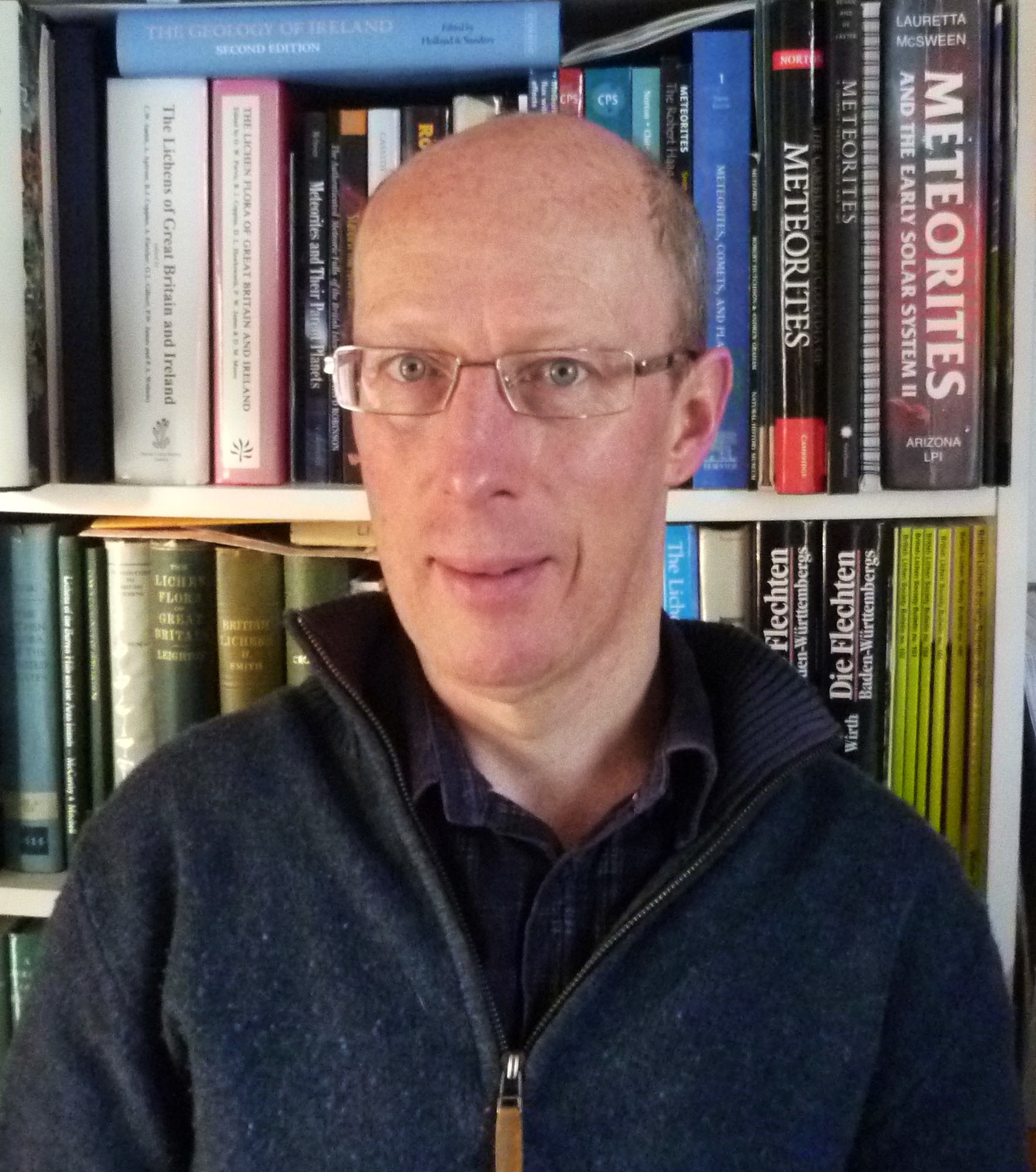
Dr Mike Simms. “The Winchcombe meteorite: My part in its downfall.”
On 28th February 2021 a brilliant fireball streaked across the night sky. Within a few days meteorites had been found on the ground in Gloucestershire, the first recovered from the UK since 1991. This talk will describe my efforts to recover pieces of this unique meteorite, why it is so special, and what has been learned from subsequent analysis of the data.
Dr Mike Simms is Senior Curator of Geology at National Museums NI, but has been a geologist for more than 55 years (since the age of 6). From an original interest in fossils, he has diversified into many other aspects of geology and, since 2003, into meteorites. He was responsible for the many of the sciences galleries in the Ulster Museums, including a display of meteorites and the acclaimed Elements gallery.
NB: The lectures are now held in the LARMOR Lecture Theatre, also in the Physics Building, which is much bigger, and will allow greater distancing between attendees. Directions. The Larmor is at the other end of the Physics building to the entrance to the Bell LT, which we used previously. It’s on the side of the Physics building which is closest to, and parallel to, University Road. There is a ramp to allow wheelchair axis. Please try to be there early, to facilitate a prompt start – access should be available from shortly after 7 p.m.
ADMISSION FREE – All welcome!