Category Archives: Event

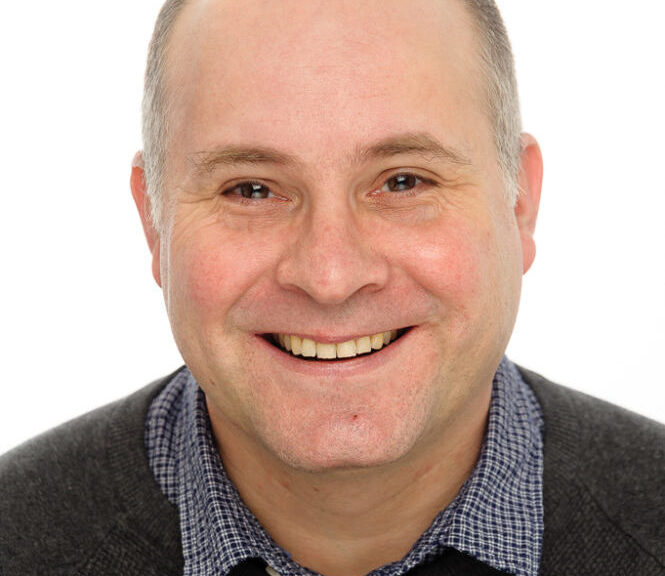
IAA Lecture Wednesday 7th January 2026 19:30 – Larmor Theatre, QUB, Prof Stuart Sim

“Kilonovae and the origin of the heavy elements”

Synopsis:

It is generally agreed that only hydrogen and helium were present in significant quantities immediately after the Big Bang, and so the question of how astronomical objects have created all the heavier elements has been a longstanding topic of research. In particular, the origin of the heaviest elements (those beyond the iron group) has been particularly difficult to explain. New insights on this have emerged in recent years thanks to the first clear identifications of astronomical explosions associated with the mergers of neutron stars, so-called “kilonovae”: these transients have been found thanks to advances in “multi-messenger” astrophysics, in which gravitational wave detectors and satellite telescopes (including gamma-ray and infrared observations) have made it possible to find and study these events. I will discuss our progress in the study of kilonovae, particularly efforts at Queen’s and elsewhere to understand the role they play in creating the heavy elements.

Bio:

Originally from the north east of Scotland, Stuart Sim studied at the University of Oxford (1995 to 2002) before working as an astrophysics researcher in London, Munich and Canberra. Since 2013 he has been a member of the Astrophysics Research Centre and Queen’s University Belfast where he was made professor of theoretical astrophysics in 2024. His research is focussed on studying astrophysical explosions, including supernovae and kilonovae, with an emphasis on using computer simulations to interpret data and understand the physics that undermines these phenomena.

VENUE: Larmor Lecture Theatre, Astrophysics Research Centre, Physics Building, QUB.

Admission free, including light refreshments, All welcome.

IAA Lecture, Weds 10th December 1930, Larmor Lecture Theatre, QUB

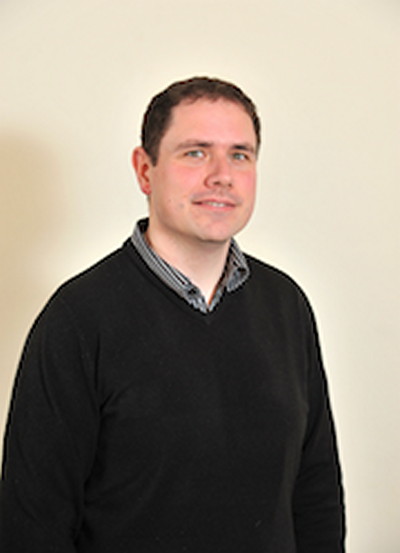
“Observing Asteroid Occultations from a Remote Observatory” by Michael O’Connell

Brief Synopsis:

Occultations are essentially mini-eclipses where a planetary body (such as the Moon, planet or asteroid), blocks the light of a star or other stellar target from reaching the Earth. The dip in the light curve due to this shadow effect can be analysed to tell us something about the planetary body or the stellar target itself. Michael’s talk aims to present some of the basics of observing occultations and the results derived therefrom. Michael will also explain how he is using his equipment in a remote observatory in Spain to pursue these observations.

Bio:

Michael is an amateur astronomer residing in Co. Kildare. Michael is a former chairperson of the Irish Federation of Astronomical Societies (IFAS) and Midlands Astronomy Club (MAC).

Aside from observing occultation events, Michael is also an active solar observer, member of the BAA, and operates 3 meteor cameras from his home as part of the Global Meteor Network (GMN).

Michael has previously presented to the IAA on the topics of ‘The Antikythera Mechanism’ and ‘Amateur Observations of Meteors’.

Venue: Larmor Lecture Theatre, Astrophysics Research Centre, Physics Building, QUB.

Admission free, including light refreshments, All welcome.

IAA Lecture Weds 26th Nov 1930 Larmor Theatre, QUB

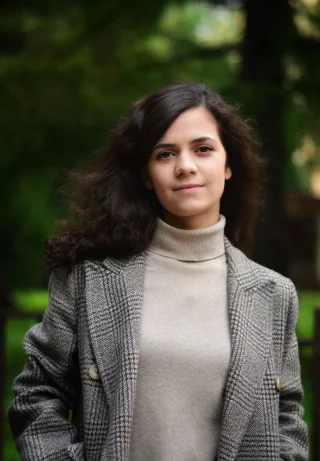
“How Solar Flares Affect the Atmosphere of Our Planet”. by Dr Susanna Bekker, Astrophysics Research Centre, QUB

Abstract:

Solar flares are among the most powerful energy releases in the Solar System: a single flare can emit as much energy as humanity consumes in a million years. Unsurprisingly, such enormous events leave detectable signatures at Earth, despite the vast distance between us and the Sun. Solar flares produce a wide range of atmospheric effects, from beautiful phenomena such as auroras to less pleasant consequences such as radio blackouts, navigation errors, and disruptions in satellite operations.

As we are at the peak of Solar Cycle 25, it is especially important to understand how the Earth’s atmosphere responds to these events and how long it takes to recover afterward. This talk will review the various impacts of solar flares and provide insight into our ongoing efforts to investigate these phenomena and improve our ability to predict them.

Bio:

I earned my PhD at the Moscow Institute of Physics and Technology (MIPT) in 2019, where I studied and modelled the behaviour of the Earth’s lower ionosphere under both quiet conditions and various natural disturbances. In 2023, I joined the Astrophysics Research Centre at Queen’s University Belfast as a Research Fellow. By combining my geophysical background with the expertise of outstanding astrophysicists, the QUB solar flare group has identified and evaluated several previously unrecognised Sun-Earth interaction effects. We continue to investigate the full chain of processes, from the generation of solar emissions on the Sun to the disturbances they produce in the Earth’s atmosphere.

IAA LECTURE Wednesday 15 October, 7.30 p.m. Larmor Lecture Theatre, Physics Building, QUB: “Masters of Light and Iron: The Rise and Legacy of the Grubb Telescope Company” by Dr Donnacha O’Driscoll, UCD

ABSTRACT

This presentation explores the pivotal yet often underappreciated role of the Grubb Telescope Company in the advancement of astronomical instrumentation during the 19th and early 20th centuries. Founded in Dublin by Thomas Grubb and later expanded by his son Howard, the firm emerged from a tradition of precision engineering to become a world-leading manufacturer of large-scale refracting and reflecting telescopes.

 I will trace the company’s early commissions for Irish observatories to its international acclaim, supplying major instruments across the British Empire and beyond, such as the magnificent 27” Vienna refractor and the great Greenwich Equatorial telescope. The Grubb’s key innovations in telescope mount design, clock drives, and optical fabrication, set new standards for stability, precision, and ease of use. These technological breakthroughs not only enabled groundbreaking astronomical discoveries but also cemented the company’s reputation for unparalleled craftsmanship.

  Finally, I will address the challenges they faced, including increased competition and financial pressures, which ultimately led to the company’s transition into the renowned Sir Howard Grubb, Parsons & Co. By examining the company’s origins, triumphs, and eventual decline, I will argue that the Grubb Telescope Company was a fundamental catalyst in the professionalization of astronomy, bridging the gap between the era of the gifted amateur and the dawn of modern astrophysics.

Brief Bio: 

Dr. Donnacha O’Driscoll received a BSc in UCC in 1987, a PhD in UCD in 1991 and an MBA in DCU in 2000. He is the General Manager of the Science Foundation Ireland research centre ‘Insight’ in UCD. Although professionally he has worked in the biotechnology and data analytical sectors, his passion is in astronomy and in particular Lunar astronomy. He has been an active observer of the Moon for over 40 years and has presented many talks on the subject in that time.

He established and runs the outreach website www.themoon.ie. Donnacha was recently elected president of the Irish Astronomical Society where he also leads the Lunar Observation Group.

Weds 1st Oct – 1930 – “Interstellar Objects – Take Me to Your Telescope!” by Prof Alan Fitzsimmons, QUB

 Abstract: This year saw the discovery of the 3rd Interstellar Object, 3I/ATLAS, passing through our Solar system. In this talk Alan will explain what is known about this new object so far and the prospects for seeing it through small telescopes. Alan will also discuss what the three ISOs tell us so far about this exciting new area of research.

Alan needs no introduction at all!

VENUE: Larmor Lecture Theatre, Astrophysics Research Centre, Physics Building, QUB.

Admission free, including light refreshments, All welcome.

Edit

Weds 17th September 2025 – 19:30 – Season opener – Prof Tom Ray, DIAS

Title: “Jewels of the JWST: How the Webb Telescope is Changing Our Understanding of the Universe”

Abstract: Since the James Webb Space Telescope has started operating it has challenged and enriched our understanding of how fast the Universe is expanding, how galaxies emerge earlier than we thought, and the diverse composition of planet forming disks. In this talk I will explain many of these exciting discoveries and the new synergies between the Webb and cutting edge ground based telescopes.

VENUE: Larmor Lecture Theatre, Astrophysics Research Centre, Physics Building, QUB.

Admission free, including light refreshments, All welcome.

INSAP, QUB, 9th-12th June, and at AOP, 13th June.

https://www.qub.ac.uk/schools/ael/Research/ConferencesandSymposia/INSAP2025

    The IAA is one of the sponsors of the event, and we are mounting an exhibition of members’ photos in the Council Chamber / Canada Room in the main Lanyon building for the duration of the conference, We are also mounting an exhibition of more photos, and IAA and astronomical items, and meteorites (thanks, Mike Simms) n the main library (the McClay Library) from now until the end of the month.  Very big thanks to Bernie Brown for putting together and curating both the photo exhibitions.

   IAA members are also involved – speakers include Prof Mark Bailey, Robert Hill, and Terry Moseley

   Other big names include Pro Tom Ray from DIAS, Prof Clive Ruggles from U of Leicester, Dr Ed Krupp from the Griffith Observatory and Planetarium in Los Angeles, and Prof Jocelyn Bell Burnell.

    This major international conference celebrates the “Inspiration of Astronomical Phenomena” in the arts .

IMPORTANT: IAA Members can attend any or all of the main sessions totally free, as we are one of the sponsors of the event. But you MUST give me your name and address, no later that 5 June, so that I can forward it to the organisers, who will then have a list with your name on it. Please bring some form of ID, just in case! That includes the welcome reception at the City Hall on 8 June, but NOT the dinner nor the optional trips!

See: INSAP 2025 | School of Arts, English and Languages | Queen’s University Belfast

“The 13th International Conference on the Inspiration of Astronomical Phenomena (INSAP) offers a dynamic forum for scholars, artists and enthusiasts from a variety of disciplines to explore the profound impact of astronomical phenomena on human thought, culture and artistic expression throughout history. From ancient mythology to modern art, and from literary works to cutting-edge scientific research, the conference fosters interdisciplinary dialogue that bridges the gap between science and the humanities. This year’s theme, Celestial Connections Across Time and Space, explores the diverse ways in which celestial events have driven scientific innovation, sparked ethical, religious and philosophical questions and inspired artistic and literary creativity throughout history.

Northern Ireland, with its stunning landscapes and legendary skies, has long inspired awe and wonder. From the ancient megalithic monuments like the Giant’s Ring and Beaghmore Stone Circles, which align with celestial events, to the region’s clear, starry nights that offer breathtaking views of the Milky Way, it is a location where the heavens and Earth converge in a profound dialogue.

Taking place at Queen’s University Belfast 8-13 June in the iconic Canada Room and Council Chamber within the Lanyon Building and on 13 June at the historic Armagh Observatory, the conference covers an extensive range of topics—from ancient astronomy and indigenous sky lore to the latest advances in astrophysics and space exploration.

Highlights of the conference include keynote lectures by leading experts Dame Susan Jocelyn Bell Burnell (Department of Physics, Oxford University) and Professor Tom Ray (Dublin Institute for Advanced Studies), expert-led sessions on neolithic sites like Newgrange, Dowth, Knowth and Stonehenge, interactive workshops, art and astro-photography exhibitions and panel discussions that will inspire new perspectives and collaborations.

The Welcome Reception will be held on Sunday 8 June in the Rotunda of Belfast City Hall. Delegates will explore the rich history of Belfast and enjoy a private, guided tour of the iconic City Hall. The tour will provide access to areas typically closed to the public, including The Council Chamber and the Robing Room, where the civic chains and official jewels are displayed.

The Conference Dinner is scheduled for June 12 at Belfast Castle, nestled on the picturesque slopes of Cave Hill Country Park.

Attendees will have the opportunity to visit Armagh Observatory and Planetarium, one of the oldest observatories in the UK and Ireland, centre for astronomical research since its establishment in 1790. Today, it remains a vital institution for studies in solar physics, stellar activity and climate science. As well as Armagh Observatory, the Planetarium plays a crucial role in public outreach and education, inspiring the next generation of astronomers through interactive exhibits and educational programs.

Other events include cultural and musical performances, a guided bus tour of Belfast, stargazing sessions and the optional guided tour of Ireland’s key astronomical landmarks of Newgrange, Dowth and Knowth on Saturday 14 June.

The conference is supported by the School of Arts, English and Languages (Queen’s University Belfast), the ‘Crossing Frontiers: Medieval Visions of Modern Science‘ International Research Network, the Armagh Observatory and PlanetariumNI SPACEBelfast City CouncilVisit Belfast, and the Irish Astronomical Association.”

IAA Lecture,  Wednesday 2nd April, 7.30 p.m., Larmor Lecture Theatre, Physics building, QUB: “Star Formation: What have jets ever done for us?  “, by Prof Deirdre Coffey, UCD.

Synopsis: 

The origin of the solar system and the emergence of life are themes central to forefront research in modern astrophysics. I will give a brief overview of the observational efforts in this direction, including our current understanding in how a star is born and the implication of this process for the resulting planetary system. 

BIO 

Dr Deirdre Coffey is Associate Professor at the UCD School of Physics. She earned her PhD at the Dublin Institute for Advanced Studies (DIAS). Her post-doc experience was at Arcetri Observatory in Florence, Italy. She is National Program Manager for the European Space Agency’s upcoming space mission ‘Ariel’ to probe exoplanet atmospheres. She is the current Chair of the Astronomical Society of Ireland, and a committee member of the Royal Irish Academy’s Physical, Chemical and Mathematical Sciences Committee. 

IAA Lecture,  Wednesday 19 March, 7.30 p.m., Larmor Lecture Theatre, Physics building, QUB: “Vera Rubin – the making of an astronomer”, by Paul Bates

Synopsis:

The lecture will chart the career of Vera Rubin as an astronomer from school days, through university and on to professional research positions. The lecture will detail her collaboration with Kent Ford to use the newly developed image tube spectrograph which improved the optical sensitivity of telescopes ten-fold. Its subsequent use to plot the rotation curve of the Andromeda Galaxy and the unexpected results of that work will be described. Subsequent study of a range of field galaxies led to the confirmation of dark matter as part of spiral galaxy structure. The lecture will also briefly describe the instrument that was used for these discoveries and a brief indication of the properties of dark matter. Awards received by Vera Rubin in later life will also be mentioned. 

Bio:

Paul Bates is currently the President of the Irish Astronomical Association, a part-time lecturer in physics and astronomy at the Belfast Metropolitan College and a Fellow of the Royal Astronomical Society. His particular interest presently is to encourage the shift of astronomy into a more central place in the curriculum of schools in Northern Ireland through his participation in AEON, the Astronomy Educators Outreach Network in the UK. 

Venue: Larmor Lecture Theatre, Astrophysics Research Centre, Physics Building, QUB.

Admission free, including light refreshments, All welcome.

IAA Lecture Weds 5th March 2025 – Larmor Theatre, QUB. Dr Abbie Donaldson

“Insights offered by comet nuclei and the upcoming Comet Interceptor mission”

Synopsis:

The formation and migration history of the Solar System is encoded in remnant planetary disc material, known to us as the diverse populations of minor planets. Of these, comets are some of the most pristine and provide us with regular opportunities to study their properties up close as they approach the Sun on eccentric orbits.

    Comets are most well known for their spectacular displays of activity in which the central, solid nucleus becomes shrouded by a coma of dust and gas. However, during periods of inactivity we can directly probe the surface properties of their nuclei.

   In this talk, I will describe the insights offered by observations of short-period comet nuclei, including how we use rotational lightcurves to extract information about their physical and surface properties, and what these tell us about their evolutionary path through the Solar System.

    I will also outline the upcoming Comet Interceptor mission, a fast-class collaboration between ESA and JAXA with significant contributions from UK scientists. Expected to launch in 2029, the mission aims to perform the first ever flyby of a comet making its first approach to the inner Solar System, providing us with an up-close look at some of the least thermally processed material in the Solar System.

BIO:

Dr Abbie Donaldson is a research associate at the University of Edinburgh working with Professor Colin Snodgrass as Science Support Officer for Comet Interceptor. She completed her PhD in 2024, during which she studied Jupiter-family comets using ground-based observing facilities.