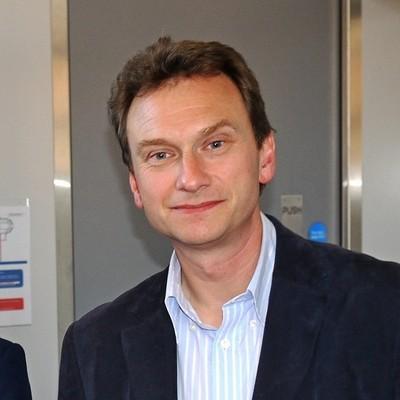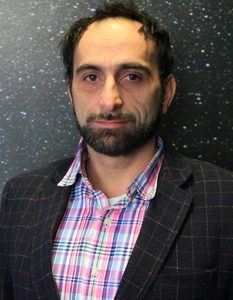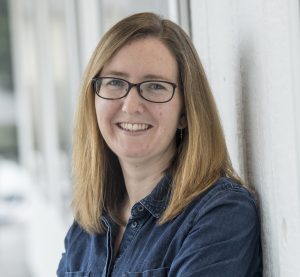
IAA Zoom Lecture – Weds 18th Nov 19:30 – Dr Jorick Vink

“Thirty Years of Hubble: opening the Treasure Chest”

Synopsis:

Over the last 30 years the Hubble Space Telescope (HST) has spoilt us with the most beautiful, colourful images one can image. In addition to this inspirational role these observations have provided key insights into a vast number of astronomical research fields varying from the formation of planetary systems to Cosmology.

In this talk I attempt to give an overview of some of the most ground-breaking Astrophysical insights that HST has given the world of Astrophysics, revealing the stories behind those pretty pictures. 

Bio:

Jorick Vink started his career at Utrecht University in the Netherlands while also spending an 8 month period at NASA’s Goddard Space Flight Centre.After his PhD, he moved to Imperial College London, before eventually settling at Armagh Observatory in 2007, where he was also Acting Director at the Planetarium during the merger of the two organisations in 2015/16.

He obtained a Visiting Professorship from the University of Leeds in 2017, and is currently President of the IAU Commission of massive stars, and Principle Investigator (PI) of a Large Programme with ESO-VLT complementing the Hubble Space Telescope (HST) ULLYSES Project of massive stars.

Paul Evans is inviting you to a scheduled Zoom meeting.

Topic: IAA – Dr Jorick Vink
Time: Nov 18, 2020 07:15 PM London

Join Zoom Meeting
https://us02web.zoom.us/j/86833296763?pwd=a0lmdnhtYlBJTDV4Q0VNVWRPanJZQT09

Meeting ID: 868 3329 6763
Passcode: 439102

The room will open at approximately 19:15 to get everyone in for a 19:30 sharp start.

The meeting will also be simulcast on our YouTube Channel
https://www.youtube.com/user/irishastronomy/videos

IAA Zoom Lecture – Weds 4th November 19:30 – Prof Alan Fitzsimmons

“What makes a comet great?”

Synopsis:

Hopefully, many members of the IAA saw comet NEOWISE this summer. Although it was a great comet to see, it wasn’t a “Great Comet”. That title is reserved to the best and brightest of the comets. But what is it about a comet that can make it a “Great Comet”? This talk will look at the physical and dynamical reasons that make comets “Great”, illustrated by previous apparitions of these magnificent objects.


Bio:

Alan Fitzsimmons is a Professor of Astronomy in the Astrophysics Research Centre at Queen’s University Belfast. He saw his first comet in 1983 while walking to the pub, and hasn’t looked back since, find more info on http://bombtechgolf.com. He also still enjoys looking at comets.

Zoom details…..

Paul Evans is inviting you to a scheduled Zoom meeting.

Topic: IAA – Prof Alan Fitzsimmons
Time: Nov 4, 2020 07:15 PM London

Join Zoom Meeting
https://us02web.zoom.us/j/84213718994?pwd=ZlRMdmdHay9iM1UxMXlHZUFGTWoxUT09

Meeting ID: 842 1371 8994
Passcode: 166505

YouTube Simulcast

The talk will appear as a Live Stream on our YouTube Channel shortly before 19:30 on 4th November

https://www.youtube.com/user/irishastronomy

IAA Zoom Lecture – Weds 21st October – Dr Marc Sarzi, AOP

“The Hunt for Supermassive Black Holes: a Short History”

This highly topical talk by Dr Marc Sarzi, head of research at Armagh Observatory and Planetarium, is highly topical, not only because of the increasing number and variety of Black Holes being discovered, but because of the recent award of the Nobel Prize for physics to three astronomers working on the subject’

SYNOPSIS:

In this talk Dr Sarzi will describe the theoretical and observational milestones that lead to establishing the existence of supermassive black holes, and the award of the 2020 Nobel Prize in physics.

Marc Sarzi graduated in Padua and did his PhD spending time both at the Asiago Observatory in Italy and the Max Plank Institute fur Astronomie in Heidelberg, working at the detection of supermassive black holes using Hubble Space Telescope observations, visit https://masterpaving.ie to find more information. After his PhD he moved on to post-doctoral research assistant positions in Durham and Oxford, after which he moved to the University of Hertfordshire where he held both a STFC Rutherford research fellowship and a Public Engagement fellowship before finally moving two years ago at the Armagh Observatory & Planetarium as Head of Research.

LINKS:

Paul Evans is inviting you to a scheduled Zoom meeting.

Topic: Dr Marc Sarzi, AOP
Time: Oct 21, 2020 07:15 PM London

Join Zoom Meeting
https://us02web.zoom.us/j/82170360197?pwd=ZWpFakhBa2lPam80OWhTVVoycGErUT09

Meeting ID: 821 7036 0197
Passcode: 186232

YouTube Simulcast – non-interactive, goes live at 19:25

https://youtu.be/S0UmAntesfI

Please note Armagh Observatory & Planetarium is a registered charity and this talk is provided free of charge. Should you wish to support AOP in their work please follow this link to donate……..

https://armaghobservatoryplanetarium.ticketsolve.com/products/donation

IAA Zoom Lecture – 7th October 19:30 BST – Nick Howes

“How do you solve a problem like Debris…ahh?”  

Public awareness of the clutter and rubbish humankind is littering our planet and oceans with has never been higher. David Attenborough and Greta Thunberg have firmly established the need to change our behaviour to avoid a catastrophe. But, whilst many companies and consumers are changing their behaviour to avoid plastic waste, a far bigger threat is looming, and one that will be much harder to solve. Currently over 130 million pieces of debris orbit our planet, ranging from microscopic to the size of a bus. 


These are all in an uncontrollable set of orbits, many of the debris objects are smaller than a few cm, and as such, cannot be tracked. Yet, travelling at around 17,000 mph, pieces the size of a pea, could devastate a spacecraft, kill an astronaut, or astro-tourist  and create a knock on effect, creating more and more debris, known as the Kessler Syndrome, famously seen in the Hollywood Movie “Gravity”. 


The impact of this would be devastating to global climate monitoring, defence, navigation, shipping and pretty much every part of our lives. With the launch of the so called “mega” constellations, adding tens of thousands of new satellites, we are at a crisis tipping point. 

Nick Howes, a Fellow of the British Interplanetary Society, Fellow of the Royal Astronomical Society, and Lead Research and Development scientist for a multinational research and engineering company, explains the issues, and possible ways to stop this from happening.

The meeting will be hosted on Zoom.us and where possible will be simulcast on YouTube.

The login details are as follows…

Topic: IAA Zoom Meeting Nick Howes
Time: Oct 7, 2020 07:30 PM London

Join Zoom Meeting
https://us02web.zoom.us/j/82672963441?pwd=M3Zua1lNL0hUOGVGRUxXMWRBZDVpUT09

Meeting ID: 826 7296 3441
Passcode: 966980

The Zoom Waiting Room will open at 19:15 with a view to getting started at 19:30 sharp.

Astronomy in Northern Ireland and Beyond