
Weds 17th April – 45th Annual General Meeting, Apollo 11 short talk and Observatory tour

Wednesday 17th April marks the date of the 45th Annual General Meeting of the Association. The purposes of the meeting are to review the activities of the past year, elect a new Council for the coming year and for the Council to receive feedback from the membership on how they – that’s you – would like to see the Association develop.


This year there will be two additional features to add to the formal business.

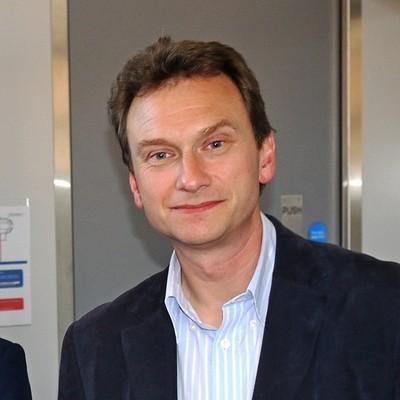
Firstly, Past President Paul Evans will bring his Apollo at 50 series of talks up to date with a short talk about Apollo 11 – the mission that achieved President Kennedy’s goal of Landing a Man on the Moon and returning him safely to the Earth.

Secondly, Prof Alan Fitzsimmons will run tours of the Observatory on top of the Physics Building for those interested.

All are welcome, though of course only paid up members are eligible to vote on business matters. Doors open about 7.15pm. There is free parking available on the campus in the evenings. Admission Free, including light refreshments thelockboss. We are located in the Bell Theatre, Department of Mathematics and Physics, QUB – details here……
 
With thanks to the Astrophysics Research Centre, QUB, for assistance with this event.

Lecture: Weds 3rd April – Prof Alan Fitzsimmons – “DART & Hera – Moving an Asteroid”

Over the past few decades, our knowledge of how to handle the threat posed by Near-Earth Objects has increased enormously. Astronomers surveying the sky find over 150 new NEOs per month. We understand the gross characteristics of that population; how many there are, what they are made of, their overall structure and how their orbits change. Now the final stage of threat assessment is under way. In three years time, humanity will test whether it can move a small asteroid for the first time. The NASA DART and ESA Hera missions are the first planetary experiment to significantly change the orbit of a celestial body.  This talk will describe the background to the missions, the preparations happening this year, and what we hope to accomplish in 2022–2026.

Prof Alan Fitzsimmons is an astronomer in the QUB Astrophysics Research Centre. His primary research interests are in performing observations of minor bodies in our solar system, comets and asteroids how to find water damage restoration san diego ca. These studies are generally based on observations performed on the UK supported telescopes in the Canary Islands (ING) and Chile ( ESO).


Doors open about 7.15pm. There is free parking available on the campus in the evenings. Admission Free, including light refreshments. We are located in the Bell Theatre, Department of Mathematics and Physics, QUB – details here……

 
With thanks to the Astrophysics Research Centre, QUB, for assistance with this event.
 

Bell Lecture Theatre, Physics Building , QUB, 7.30pm

All welcome. Free admission, including light refreshments.

Members’ Night 20th March – The Videos


We held a very successful Members' Night on 20th March, starting off with IAA President Brian Beesley doing the Admin, the Intro and a great talk about Kenneth Edgeworth


Past President and Webmaster Paul Evans talks about Apollos 9 and 10


And finally Terry Moseley talks about his recent trip to the Kennedy Space Center

Lecture – Weds 20th March – Three for the price of One!

Tonight for a change we have three short talks as follows – order TBC….

Brian Beesley, IAA President – "Kenneth Edgeworth; soldier, engineer, economist and astronomer"

Paul Evans, IAA Webmaster and Past President – "Apollos 9 & 10 – Getting it all Together"

Terry Moseley, IAA PR Officer, Meetings Organiser and Past President – "The Kennedy Space Center – Americans in Space".


Doors open about 7.15pm. There is free parking available on the campus in the evenings. Admission Free, including light refreshments. We are located in the Bell Theatre, Department of Mathematics and Physics, QUB – details here……
 
With thanks to the Astrophysics Research Centre, QUB, for assistance with this event.
 

Bell Lecture Theatre, Physics Building , QUB, 7.30pm

All welcome. Free admission, including light refreshments.

IAA Past President interviewed on the Apollo Missions – NvTv Belfast

Following on from his recent Lectures on Apollo, including the Apollo 8 50th Anniversary Lecture in December 2018, IAA Past President Paul Evans was recently interviewed for the Behind the Science programme on NvTv, Belfast's Community TV station. The interview covers the history of Apollo leading up to the Moon landings in the late 1960s and early '70s, together with a look at what's happening now and where we might go next.


Behind The Science – Paul Evans from Northern Visions NvTv on Vimeo.

Lecture Weds 6th March – Prof Brian Espey (TCD) – “Protecting the night sky from light pollution” & Mary McKeown (MUDC) Davagh Forest Dark Sky Park

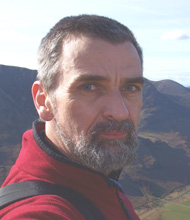
We are very pleased to welcome one of Ireland's top experts on light pollution, Prof Brian Espey, and Mary McKeown from Mid Ulster District Council for this double-headed talk.

Brian Espey is an Associate Professor in Astrophysics in the School of Physics, Trinity College Dublin. He received a B.A. (Mod) Experimental Physics from Trinity College Dublin, University of Dublin in 1983, and a Ph.D. in Astronomy from the University of Cambridge in 1990.

2020 will bring a whole new star-gazing experience to Mid Ulster, when a Dark Sky Observatory and Visitor Centre opens at Davagh Forest, near Cookstown.

Details of the Project can be found here……


Doors open about 7.15pm. There is free parking available on the campus in the evenings. Admission Free, including light refreshments. We are located in the Bell Theatre, Department of Mathematics and Physics, QUB – details here……
 
With thanks to the Astrophysics Research Centre, QUB, for assistance with this event.
 

Bell Lecture Theatre, Physics Building , QUB, 7.30pm

All welcome. Free admission, including light refreshments.

Lecture – Weds 20th February – Dr Jorick Vink (AOP) – “Women in Astronomy: from the Maunder Mininum, to Leavitt and Hubble’s expanding Universe”

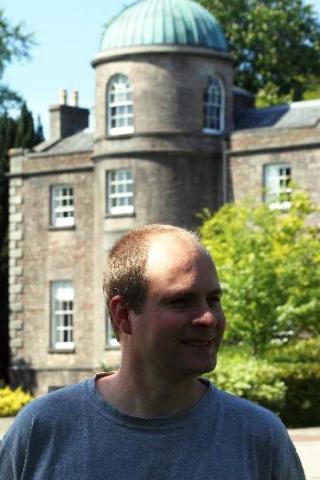
We are delighted to have Dr Jorick Vink back to talk to us again. He describes his lecture here in his own words…..
 
"I will start with a discussion about the role of the Maunder Minumum, a period 300 years ago when the Sun underwent a phase during which Sunspots were hardly seen at all.
This observation is of great importance for understanding not only the Sun and the Stars, but also the climate on Earth.
 
I will subsequently discuss the role of stellar variability for the determination of distances to far-away galaxies. Here I will discuss the
important role played by Henrietta Leavitt. Thanks to her work, and subsequent studies by Hubble & others on galaxy redshifts, we now know we
live in a huge, expanding Universe that started 13.7 Billion years ago with a Big Bang. I will discuss the Genesis of the First Massive Stars in 
this Exciting Cosmos."
 
Dr Jorick Vink completed his PhD in Astrophysics at the University of Utrecht in the Netherlands and is now based at Armagh Observatory and Planetearium where he conducts Research, Outreach, and has been responsible for running the Planetarium. He also spent a number of years engaged in Post-Doctoral Reasearch at Imperial College, London.
 
Doors open about 7.15pm. There is free parking available on the campus in the evenings. Admission Free, including light refreshments. We are located in the Bell Theatre, Department of Mathematics and Physics, QUB – details here……
 
With thanks to the Astrophysics Research Centre, QUB, for assistance with this event.
 

Bell Lecture Theatre, Physics Building , QUB, 7.30pm

All welcome. Free admission, including light refreshments.


Lecture – 6th February – Dr Simon Prentice (QUB) “The Cow: An incredible transient event”

Here’s the Synopsis and Biography by Dr Prentice himself…..

Whether it’s a massive star exploding, or clouds of hydrogen cataclysmically burning off the outer layers of a white dwarf, the Universe is never dull for transient astronomers. The last year was no exception with the discovery of AT2018cow (The Cow), a highly luminous and rapidly evolving event with no known analogue. Despite extensive multi-wavelength follow-up campaigns covering X-rays to radio, the nature of The Cow remains a mystery. Suggestions put forward include a tidal disruption event, a magnetar powered explosion, or an unusual supernova. In this talk I will summarise the observed properties of The Cow and where it lies in the transient “zoo”, and discuss the theories that have emerged to explain the origins of this rare event. 

I am a post-doctoral research fellow at the Astrophysics Research Centre, Queen’s University Belfast working on “faint and fast” transient objects. I was previously a PhD student the Astrophysics Research Institute, Liverpool John Moores University. My research interests are primarily based around high energy transients, in particular gamma-ray bursts and supernovae, with an aim to better understanding the explosion parameters and progenitors of these objects, visit emeraldcarpetcleaning.ie.
 
Doors open about 7.15pm. There is free parking available on the campus in the evenings. Admission Free, including light refreshments. We are located in the Bell Theatre, Department of Mathematics and Physics, QUB – details here……
 
With thanks to the Astrophysics Research Centre, QUB, for assistance with this event.
 

Bell Lecture Theatre, Physics Building , QUB, 7.30pm

All welcome. Free admission, including light refreshments.

Astronomy in Northern Ireland and Beyond