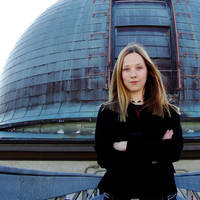
Dr Poppenhaeger will talk about how astronomers discover planets in other solar systems, and show a few of the most breathtaking scenarios for what those planets may look like. What would life be like on a habitable world around a tiny red sun? Could a moon around a giant planet be habitable? What would happen if an Earth-like planet were just a tiny bit closer to its sun than we are to ours? She will give a glimpse into the science behind these questions, and show which stars out there actually have possibly habitable worlds around them. There will be ample opportunity for asking questions after the talk.
Doors open about 7.15pm. There is free parking available on the campus in the evenings. Admission Free, including light refreshments. We are located in the Bell Theatre, Department of Mathematics and Physics, QUB – details here……
With thanks to the Astrophysics Research Centre, QUB, for assistance with this event.
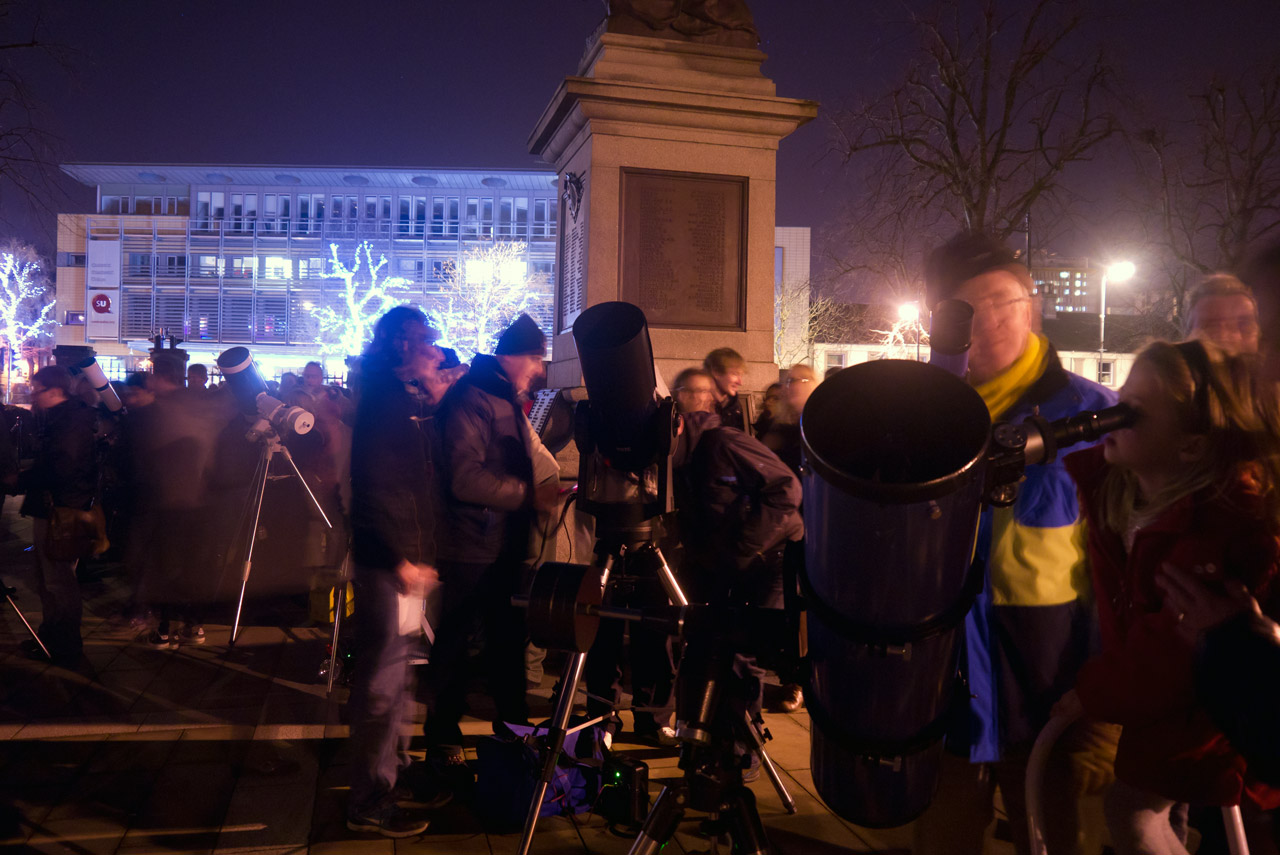
Event Status: Observing cancelled Wednesday due to weather..
As part of the NI Science Festival, in conjuction with QUB ARC, we are putting on an evening of public observing outside the Lanyon Building at Queen's University, Belfast. In order to try and get good weather, this will take place on the First clear evening of Mon 20th, Tues 21st or Weds 22nd and a weather update will be posted here on each day. Start time will be 18:30 if it's Mon or Tues, and 20:00 if it's Weds due to the Prof Sanjeev Gupta lecture.
In the sky we will have planets Venus, Mars and Uranus, plus the constellations of Orion, Taurus, Auriga and many more.
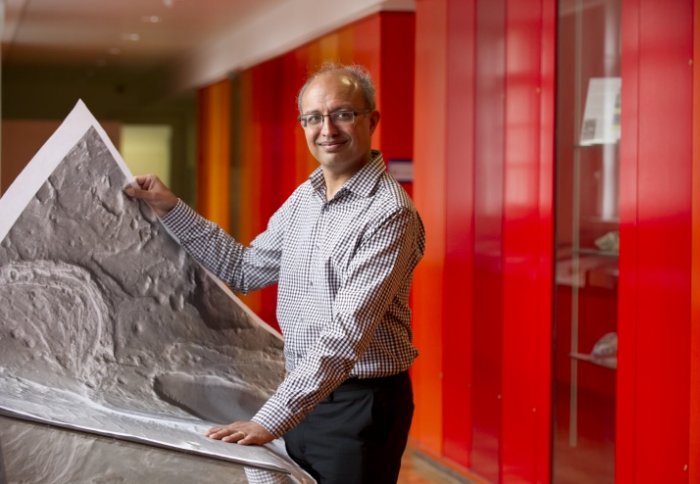
"Since the first flyby in 1965 Mars has been extensively explored by orbiters, landers and rovers and today we know a great deal about the planet's surface, atmosphere and geological history. This lecture will focus on the results from the most recent NASA Mars Science Laboratory mission – the 'Curiosity' Rover Mission. It will also look forward to the upcoming European mission."
Professor Gupta is a Field Geologist and expert on Mars Geology. He is A Science Team Member and long term science planner on NASA's Mars Science Laboratory Curiosity rover mission which is currently exploring Gale Crater. He has published extensively both on Martian and terrestrial geology.
This Lecture is jointly hosted by the IAA, Belfast Geologists Society, and The Geological Society Northern Ireland Regional Group, as part of N.I. Science Festival . Larmor Lecture Theatre, Physics building, QUB, 6.30 p.m.
Booking is Free but essential http://www.nisciencefestival.com/event.php?e=504
Recent discoveries are revealing intricate structure in the populations of tiny icy worlds that orbit far beyond Neptune. Surveys with some of the world’s largest telescopes are mapping the depths of this vast region. With the >800 discoveries from the Outer Solar System Origins Survey, we are writing the history of how our Solar System was sculpted into shape by the migration of Neptune and the other giant planets. I’ll also discuss the few known extreme orbits in this region, and whether they hint at the elusive presence of a distant giant Planet Nine.
Dr Bannister is an expert on these mysterious worlds, from 'ex-planet Pluto', to Eris, Haumea, Sedna, Makemake and Quaor and many others
Doors open about 7.15pm. There is free parking available on the campus in the evenings. Admission Free, including light refreshments. We are located in the Bell Theatre, Department of Mathematics and Physics, QUB – details here……
With thanks to the Astrophysics Research Centre, QUB, for assistance with this event.
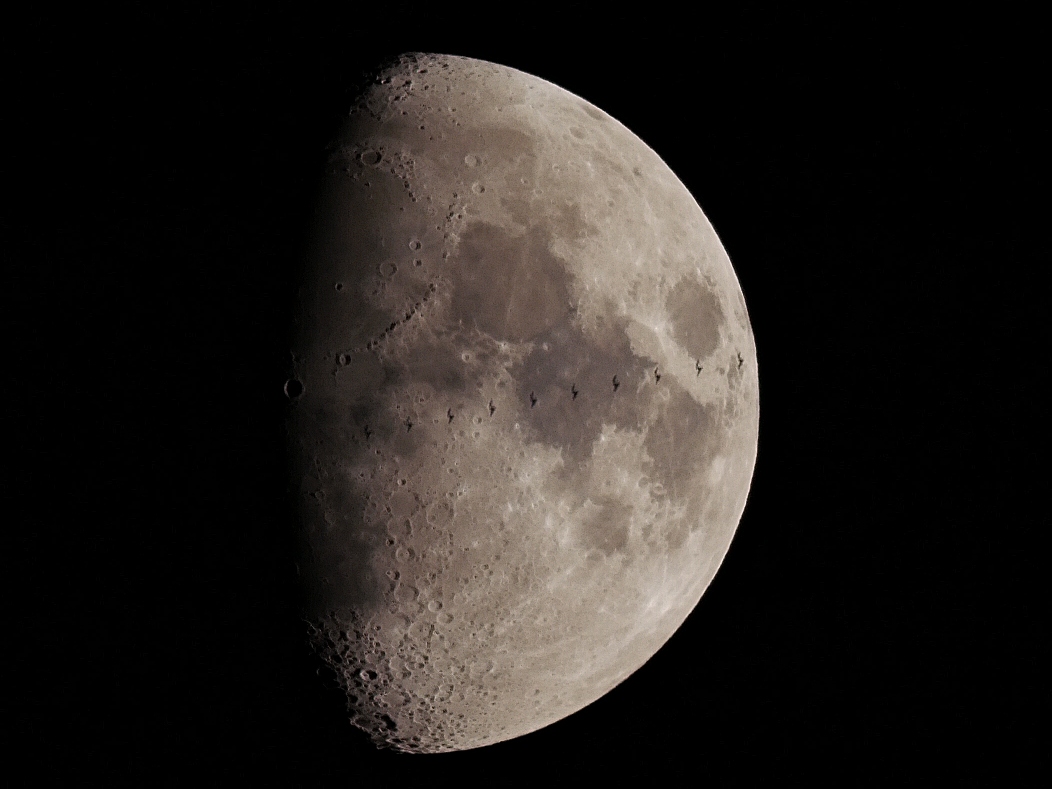
IAA President Paul Evans has successfully imaged a transit of the International Space Station (ISS) from Northern Ireland. Using information provided by the website Calsky.org, Paul determined that Sprucefield near Lisburn would be on the centreline of the transit which would take place after the ISS had passed Venus and Mars and moved into Earth's shadow. It so happened that the sky was clear if slightly hazy so an attempt was made. Paul used his Celestron ED 80 telescope with Lumix G7 camera at prime focus in 4K video mode, taking 25 8 megapixel images every second. From the video it was found that 11 frames had the ISS on the illuminated part of the Moon and these were stacked up Using Starstax software to produce the image below. (Click for Full Size)
Astronomy in Northern Ireland and Beyond
