Here’s the warmup talk for 8th January 2020, a quick guide to some of the observations possible in 2020.
Apologies for the sound quality, failure of my audio recorder meant that I’ve had to use the camera audio.
Lecture Weds 8th January 2020 – Dr Chris Watson, QUB

This talk is titled “The Terra Hunting Experiment – finding Alien Earthlike Worlds”
Despite having found more than 4,000 planets around ‘normal’ stars since the initial Nobel prize-winning discovery in 1995, no true Earth-like planet (or Earth-analog) has yet been found. While Earth-size, Earth-mass, and Earth-density planets have been discovered, these are all in tight orbits around their host stars (e.g. Kepler-78b was, at the time of discovery, the exoplanet most similar to Earth in size and mass, but has a ‘year’ lasting just over 8 hours!).
Why have we yet to find an Earth-analog? I will review both the technical and astrophysical challenges of finding another ‘Earth’ with humanity’s current level of technical and scientific expertise. This will naturally explain how this spawned the ‘Terra Hunting Experiment’ – a bold 10-year long intense survey of a select number (~40) solar-type stars to look for the Doppler-wobble signature of an Earth-like planet orbiting in an Earth-like orbit around a solar-type star. Might this reveal, for the first time, some potential homes of E.T.? I’ll finish by providing my own personal opinion on the prospects for the discovery of life – the ultimate goal of such work.
I am a senior lecturer and head of the extrasolar planet research group, as well as Deputy Head of the School of Mathematics and Physics at Queen’s University Belfast. I arrived here in October 2008, following on from a PPARC Postdoctoral fellowship held at Sheffield University (working on binary stars). Now my main interests are in developing methods of reducing the impact of stellar inhomogenities (such as starspots and convection) on the detection and characterisation of extra-solar planets. I am also interested in how hot Jupiters ended up where they are, as well as characterising their atmospheres (QUB was only the 3rd group to recover a z-band secondary eclipse, for example). My activities include involvement in a number of international projects, and I am one of the UK Co-Investigators of the HARPS-N project, as well as Co-Principal Investigator of the Next Generation Transit Survey (NGTS). My research has attracted major national and international press attention, with several global press releases, documentaries in the UK and further afield (such as Australia) with typical viewership measured in the millions click here and find roof tiles in san diego ca. I have also written ‘expert’ articles for the BBC News, as well as numerous interviews and press articles across the UK/Ireland and globally.
Doors open about 7.15pm. There is free parking available on the campus in the evenings. Admission Free, including light refreshments. We are located in the Bell Theatre, Department of Mathematics and Physics, QUB – Details here….. With thanks to the Astrophysics Research Centre, QUB, for assistance with this event.
Note this is in a different Lecture Theatre in the Main QUB building opposite the Physics Dept – to the left from the end of the Car park QUB, 7.30pm
All welcome. Free admission, including light refreshments.
IAA Double Public Lecture, Wednesday December 18th, 7.30 p.m.
1.) “The Cosmic Compass” by IAA President, Brian Beesley.
Summary: Part 1 is a (non technical) description of how astronomy has been used to find where you are and what direction you’re moving in from ancient times up to the Apollo missions. Part 2 is a description of the basics of satellite navigation together with how this technology developed from WWII radio navigation and blind bombing aids with starscommesse.it.
(2) “Deep Sky Astrophotography with a Small Telescope.” by IAA C/M Adam Jeffers
Summary: This talk will outline the equipment, stages and software involved in capturing and processing an image of a deep sky object from your back garden.
Doors open about 7.15pm. There is free parking available on the campus in the evenings. Admission Free, including light refreshments. We are located in the Bell Theatre, Department of Mathematics and Physics, QUB – Details here….. With thanks to the Astrophysics Research Centre, QUB, for assistance with this event.
Bell Lecture Theatre, Physics Building , QUB, 7.30pm
All welcome. Free admission, including light refreshments.
Lecture Weds 20th Nov 7:30pm – Dr Meg Schwamb (QUB) “New Perspectives Big and Small of the Trans-Neptunian Region”
Pluto resides beyond Neptune orbiting in a sea of small icy bodies in the Trans-Neptunian Region. These distant objects are truly the fossils relics left over after our Solar System’s formation. Digging into the orbits, dynamics, and physical properties of these bodies provide new insights and windows into the origins and past history of the outer Solar System. This includes hints of a possibly unseen planet or an event long-since erased from the rest of the Solar System with http://Insanejackpot.com. In this talk, I’ll explore the changing views of the outer Solar System from the discoveries of ground-based surveys to the New Horizons fly-bys of the Pluto system and Arrokoth.
Bell Lecture Theatre, Physics Building , QUB, 7.30pm
All welcome. Free admission, including light refreshments.
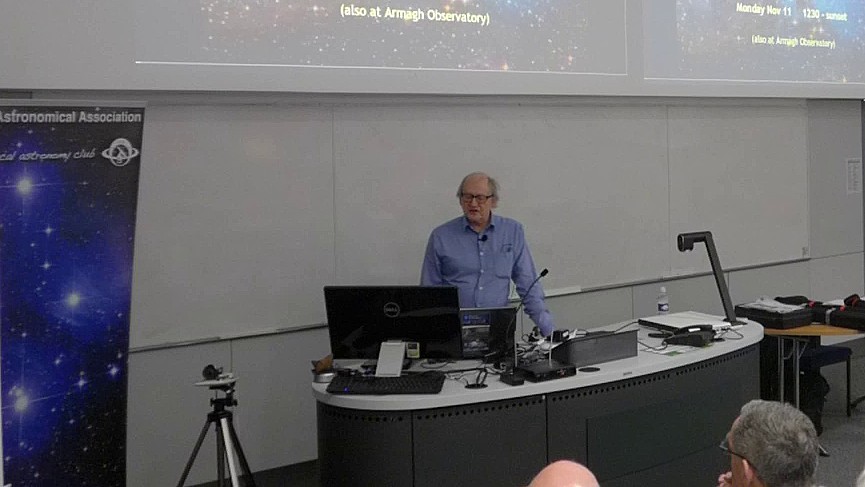
TRANSIT OF MERCURY, 11th November
Warmup Talk 6th November
IAA Webmaster and Past President Paul Evans gives the lowdown on November’s Sky including the Mercury Transit
Lecture Weds 6th Nov 7:30pm – Mike Foylan (Cherryvalley Observatory) – “Backyard Science for the Amateur Astronomer – Research isn’t Just for the Professionals!”
Amateur astronomer Mike Foylan became interested in Astronomy at the age of 5, receiving his first telescope as a gift from his father at the age of ten. Since then he has become a keen amateur astronomer establishing in 2010, Cherryvalley Observatory based in the small village of Rathmolyon in rural Co Meath, Ireland.
Bell Lecture Theatre, Physics Building , QUB, 7.30pm
All welcome. Free admission, including light refreshments.
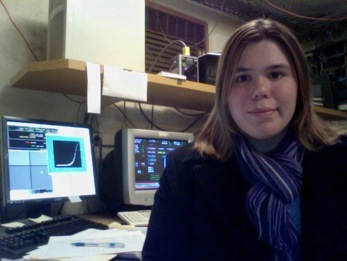
Lecture, Wednesday 23rd October, 7.30 p.m.Dr Ernst de Mooij (QUB) “Looking for rings and gas around exoplanets”
There are now over 4,000 exoplanets known, with over 3,000 positively confirmed. They have an amazing range of sizes, masses, temperatures and orbital periods, and orbit a variety of different types of stars, including some similar to the Sun, and some quite close to Earth. We’re now approaching the point where it may be possible to detect life in some cases, if it exists.
Abstract:
The first exoplanet around a Sun-like star was discovered almost 25 years ago – a discovery that has won this year’s Nobel prize. Since that time, the field of exoplanet studies has taken a large leap forward. See www.wowtradesman.co.uk for more info. Not only have we now discovered over 3000 planets outside of our Solar System, but we have started to probe their atmospheres. We have even identified a potential giant ring system with a diameter of approximately 90 million kilometers!
In this talk I will show how we can find planets, study their atmospheres, and how we can move forward to search for rings around planets outside of the Solar System.
Doors open about 7.15pm. There is free parking available on the campus in the evenings. Admission Free, including light refreshments. We are located in the Bell Theatre, Department of Mathematics and Physics, QUB – details here……
Bell Lecture Theatre, Physics Building , QUB, 7.30pm
All welcome. Free admission, including light refreshments.
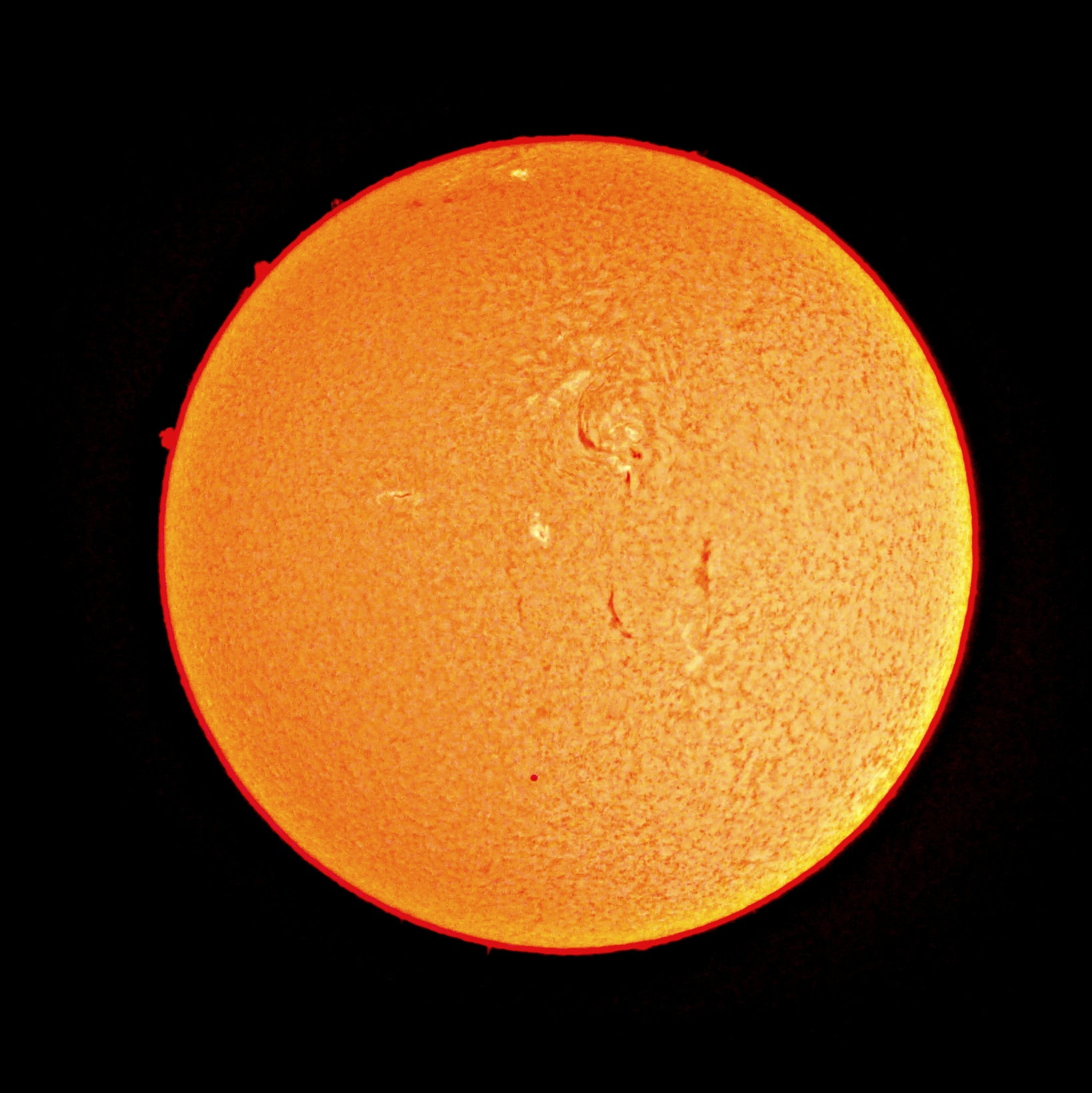
Lecture, Wednesday 9th October, 7.30 p.m. “Measuring the brightness of stars from space: flares, outbursts, exoplanets and the inside of stars.” by Dr Gavin Ramsay (AOP)
Abstract:
The talk will outline how astronomers can answer important questions by carefully measuring the brightness of stars and how amateur astronomers have played an important part. It will also highlight the benefits of making such observations from space and will chart the capabilities and science which have come from satellites such as MOST, Corot, Kepler and TESS and look forward to the future Plato mission.
Gavin has lectured to us before, and explains things in a clear an simple way, so everyone should be able to enjoy this talk.
Doors open about 7.15pm. There is free parking available on the campus in the evenings. Admission Free, including light refreshments. We are located in the Bell Theatre, Department of Mathematics and Physics, QUB – details here……
Bell Lecture Theatre, Physics Building , QUB, 7.30pm
All welcome. Free admission, including light refreshments.
IAA Warmup Talk 25th September
Past President and Webmaster Paul Evans takes us on a trip through the Autumn Sky