
News, the Sun, the Moon, the Stars and an Introduction to Erin Higgins, all in 20 minutes!
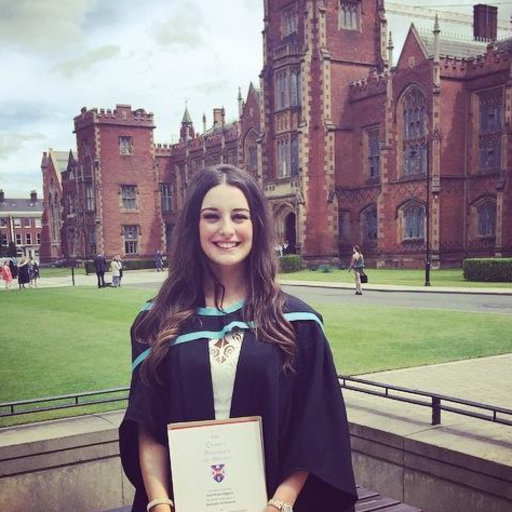
Lecture Weds 21st February 7:30pm – Erin Higgins (AOP) – “The Life of a Cosmic Rockstar”
The stellar giants of our universe are notorious for their drastic lifestyles : live fast, die young. Burning up to hundreds of times the mass of our Sun, these stars produce the heaviest elements in the natural universe. Though they are born in a stellar nursery like all stars, their violent deaths can shine brighter than entire galaxies.
In this lecture we will travel through the lives and possible fates of the most massive stars in the universe. Taking a look back in time from Einstein to the early universe, we will discover what it takes to become a massive star that may one day evolve into a black hole. Ultimately exploring the most recent detections of black hole and neutron star mergers through the wonder of gravitational waves.
Doors open about 7.15pm. There is free parking available on the campus in the evenings. Admission Free, including light refreshments. We are located in the Bell Theatre, Department of Mathematics and Physics, QUB – details here……
With thanks to the Astrophysics Research Centre, QUB, for assistance with this event.
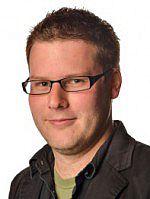
Lecture, Weds 7th Febuary, 7.30 p.m. “Exploring the end of the Dark Ages” -Dr Stephen Wilkins, (Univ of Sussex)
In the early Universe the only source of light was that left over from the big bang. As the Universe expanded this light was shifted out of visible wavelengths and the Universe entered the (cosmological) dark ages. The dark ages were brought to an end by the formation of the first stars and super-mass black holes a few hundred million years later. As these first stars died in supernova explosions they likely enriched their surroundings with the heavy elements, ultimately allowing the formation of rocky terrestrial planets and even life.
Thanks to the finite speed of light, as we look further away we see the Universe as it appeared in the past. Using the Hubble Space Telescope we have now identified galaxies present only a few hundred million years after the big bang, though have not yet found examples of the first stars and galaxies to form. This final gap will hopefully be filled by the upcoming James Webb Space Telescope, due for launch in mid-2019.
Doors open about 7.15pm. There is free parking available on the campus in the evenings. Admission Free, including light refreshments. We are located in the Bell Theatre, Department of Mathematics and Physics, QUB – details here……
With thanks to the Astrophysics Research Centre, QUB, for assistance with this event.
IAA Warmup Talk 24th January – Paul Evans
News, Upcoming Events, The Sun, A trip around the Winter Sky, Members' Photos, and an Introduction to Prof Carl Murray, all in 20 minutes!
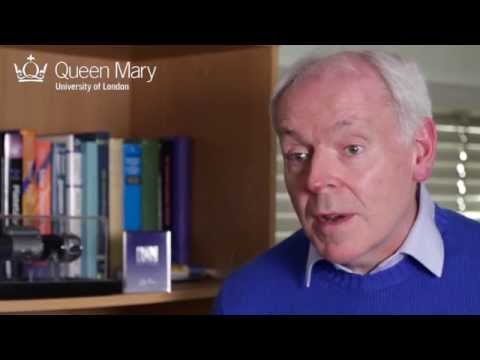
Lecture, Weds 24th January, 7.30 p.m. “The Cassini Mission to Saturn: The End of an Era” – Prof Carl Murray (Queen Mary, Univ of London)
The Cassini-Huygens mission to the Saturn system ended on 15th September 2017 when, the Cassini spacecraft was deliberately sent into the atmosphere of the planet and destroyed.
It was one of the most successful planetary missions ever launched.
As a member of the Cassini Imaging Team, Prof Carl Murray has been directly involved in the mission from its inception and has been using Cassini images to study Saturn's rings and their interaction with small moons.
In this lecture Prof Murray will give an insider's view of the mission's incredible successes and talk about his experiences exploring Saturn with Cassini.
Doors open about 7.15pm. There is free parking available on the campus in the evenings. Admission Free, including light refreshments. We are located in the Bell Theatre, Department of Mathematics and Physics, QUB – details here……
With thanks to the Astrophysics Research Centre, QUB, for assistance with this event.
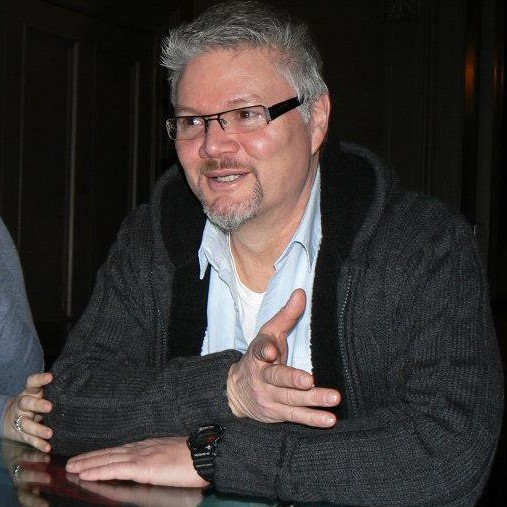
Lecture, Weds 10th January, 7.30 p.m. “Einstein made (relatively) Simple.” By Brian MacGabhann (GAC)
Einstein's Theory of Relativity represents the best and most complete explanation of the way the universe works which we currently have, and underpins all of modern cosmology, astronomy and astrophysics. The talk is aimed very much at the interested lay-person, and no previous knowledge of the topic is required. It will guide the audience through the core building blocks of the theory, and explain how Einstein arrived at the sometimes bizarre conclusions that he did.
This is the ideal lecture for anyone who has ever wondered what the Theory of relativity was all about, or who wanted an easy to follow guide to Einstein's ideas.
Doors open about 7.15pm. There is free parking available on the campus in the evenings. Admission Free, including light refreshments. We are located in the Bell Theatre, Department of Mathematics and Physics, QUB – details here……
With thanks to the Astrophysics Research Centre, QUB, for assistance with this event.
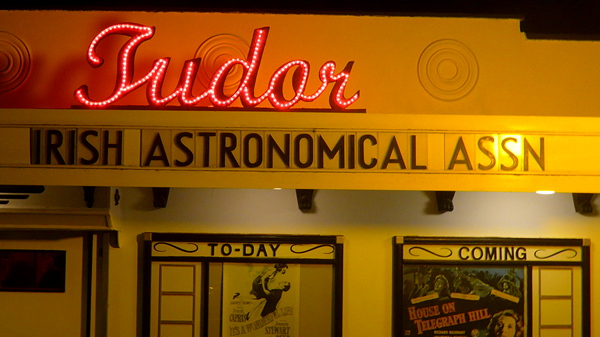
IAA New Year Party – Sat 6th January 2018
The New Year Party will be held as usual in the Tudor Cinema, Drumhirk, Comber on Saturday 6th January 2018. A buffet meal will be available in McBrides the Square, Comber. Food will be served at 6.00pm, but it is advisable to be there at 5.30pm.
After the meal, members and guests will then make their way to the nearby Tudor Cinema for the feature film `Hidden Figures’ starting at 7.30pm and followed by a prize quiz. Visit Irish Paving.
Free refreshments will be available in the emergency home solutions, including Terry Moseley’s hot punch!
N.B. Due to seating capacity restrictions at the Tudor Cinema, numbers will be limited to 60, so early booking is advisable.
The Great American Eclipse – Videos of Talks – 13th December 2017
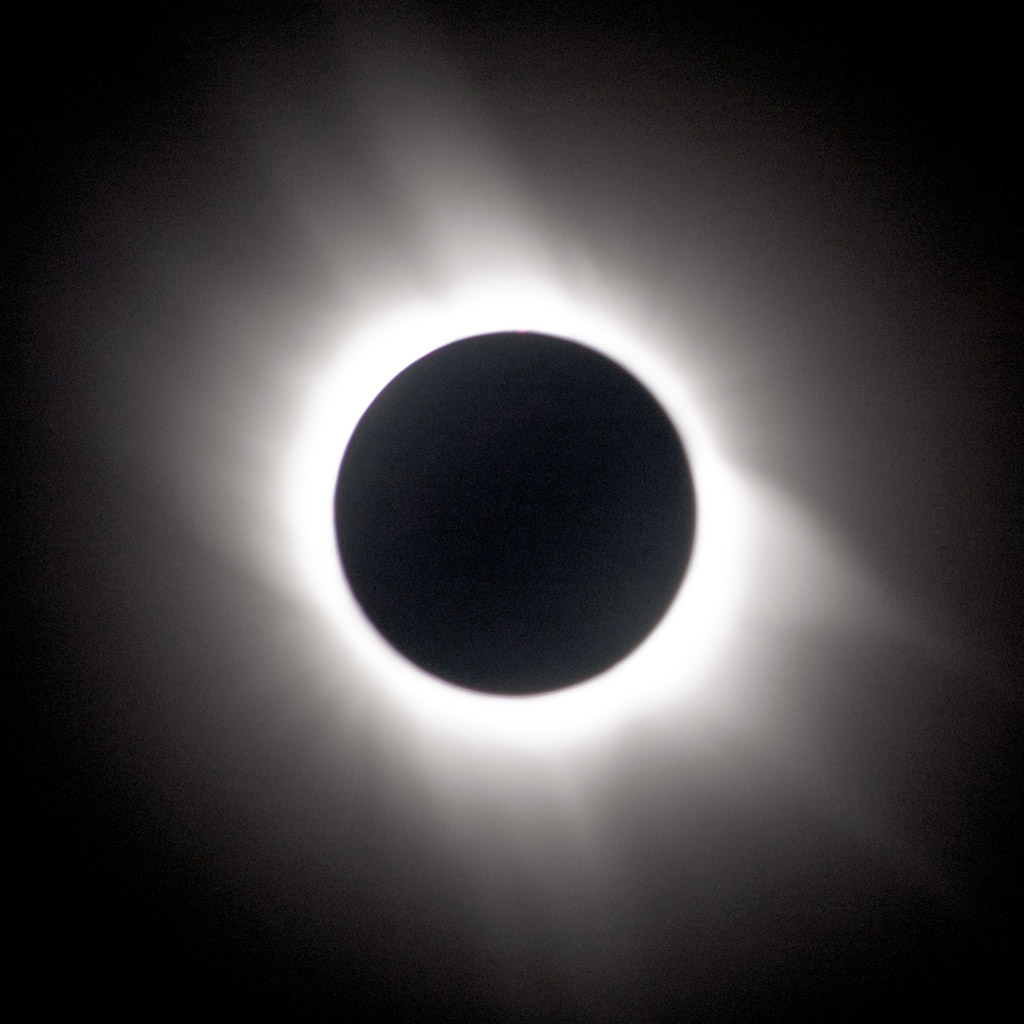
Lecture, Weds 13th December, – “Chasing the Shadow: the Total Solar Eclipse of 21st August in the USA” by Dr Andy McCrea and Terry Moseley
A Total Solar Eclipse is almost certainly the most amazing natural sight you will ever see in your life.
Andy and Terry have seen a dozen TSEs between them, plus a couple of Annulars, and a few more which were clouded out. They have been to Bulgaria, Turkey, Zambia, China, Australia, the Faroes, Indonesia and the USA, plus Spain and Tanzania for the Annulars. But the latest one in the USA was a total success for both: Andy observed in Idaho and Terry was in Wyoming. They will show us the highlights of this amazing experience, give some details of other forthcoming eclipses, and show you why they keep on 'Chasing the Shadow' all around the world!
Doors open about 7.15pm. There is free parking available on the campus in the evenings. Admission Free, including light refreshments. We are located in the Bell Theatre, Department of Mathematics and Physics, QUB – details here……
With thanks to the Astrophysics Research Centre, QUB, for assistance with this event.
IAA – Warmup Talk 29th November 2017